Does Hand Sanitizer Weaken Press-On Nail Glue?
Test sanitizer-related lifting without assuming alcohol automatically dissolves every cured press-on bond.
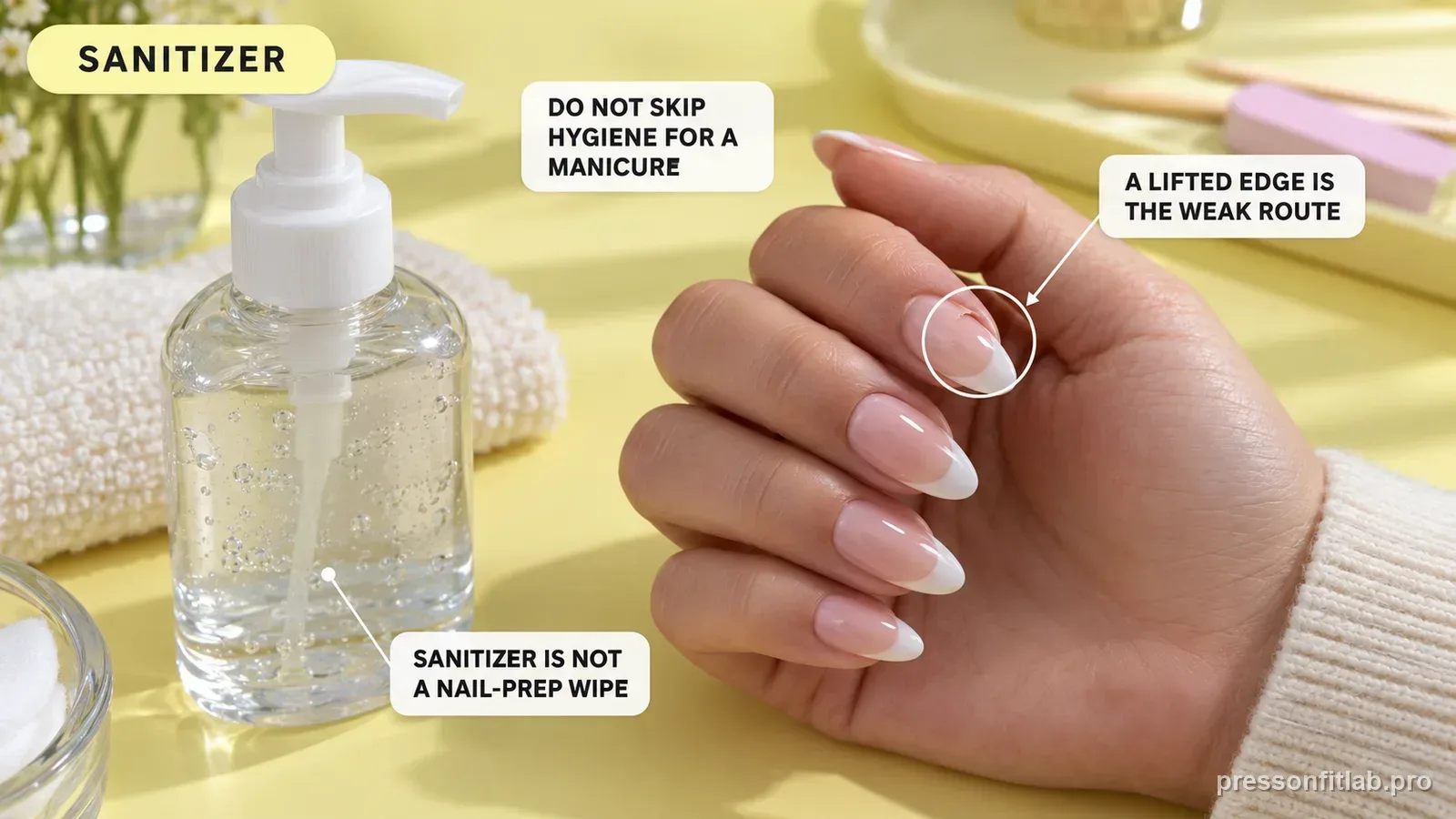
Heavy sanitizer use can correlate with early press-on lifting, but the mechanism is not simply “alcohol dissolves all cured glue.” Cyanoacrylate cure and performance depend on formulation and conditions, while lifted edges give liquids an easier route into the bond. Keep required hygiene, use manufacturer-specified nail prep rather than sanitizer as a substitute, and diagnose whether failures start at an already weak perimeter.
Check these first
- ✓ Does sanitizer reach a visibly lifted edge?
- ✓ Are you applying press-ons immediately after gel sanitizer or lotion?
- ✓ Do failures cluster on nails whose sidewalls were already marginal?
- ✓ Do intact nails survive while pre-lifted nails worsen?
- ✓ Does the same finger fail regardless of sanitizer exposure?
Do not reduce hygiene to protect a manicure
Sanitizer use may be medically or occupationally necessary. The press-on method should adapt to hand-hygiene requirements, not the other way around.
Industrial adhesive data are useful mainly for one caution: do not assume all alcohol exposure instantly dissolves all cured cyanoacrylate. 3M's CA40H data sheet describes good resistance to isopropyl alcohol for that specific formulation. Consumer nail glue is not CA40H, so this supports a restrained conclusion—alcohol effect is formulation- and interface-dependent, not universal.
A cured adhesive joint differs from uncured glue
Cyanoacrylate changes rapidly during polymerization, and its behavior after cure is not equivalent to a fresh liquid drop. Avoid oversimplifying every alcohol exposure as immediate dissolution.
Before application, sanitizer can be a different problem because the product on your hands may include glycerin, emollients, fragrance, or thickeners. Glamnetic instead directs users to clean, polish-free nails, light buffing, and an included alcohol pad. Treat the manufacturer's final prep step as controlled surface preparation rather than substituting whatever sanitizer is nearby.
A lifted edge creates the vulnerable route
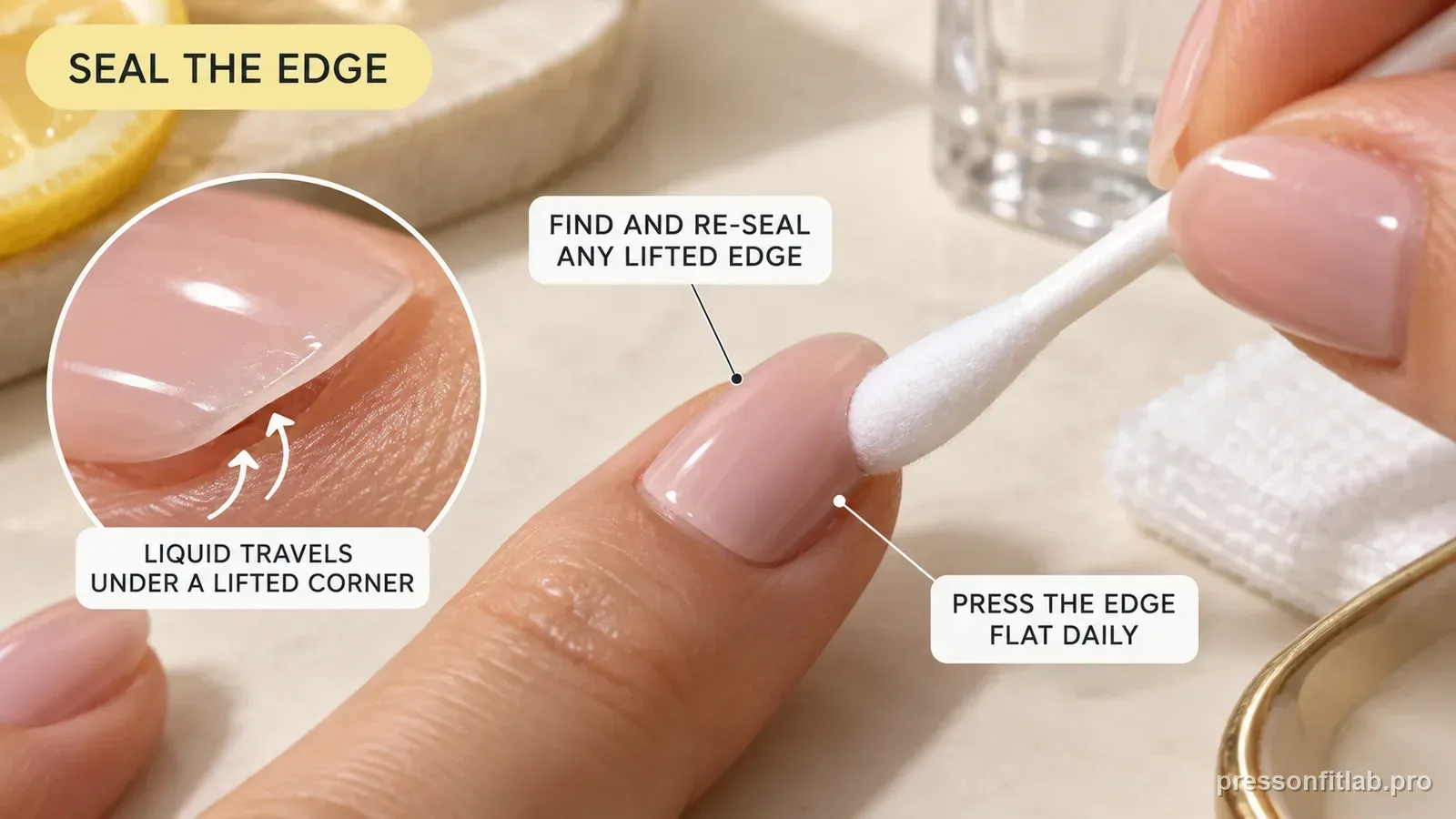
An intact perimeter exposes little of the bond. Once a sidewall or cuticle edge opens, liquids and repeated finger flexing can act on the same weak boundary again and again.
During wear, inspect whether sanitizer reaches a pre-existing gap. A sound perimeter presents a small exposed edge; a lifted sidewall exposes two larger internal surfaces and gives liquid a capillary path. If deterioration always starts from an edge that was already white or open, the first cause is likely mechanical fit rather than alcohol chemistry.
Hand sanitizer is not automatically a nail-prep wipe
Press-on instructions specify their own cleaning and alcohol-pad sequence. Commercial sanitizers can contain gels, humectants, fragrances, or emollients, so using them as the final prep step can introduce variables the nail system was not designed around.
Occupation also creates confounders. A healthcare worker who sanitizes frequently may simultaneously wash hands often, wear gloves, open packaging, and use fingertips intensively. A food-service worker may add water and detergent exposure. Record the failed finger and first lift location instead of attributing the entire work environment to one ingredient.
Heavy-use occupations change several variables at once
Healthcare, food service, and travel can combine sanitizer, washing, gloves, gripping, and frequent hand use. A localized one-finger failure is therefore more suggestive of geometry than a universal chemical effect.
Do not design a test that reduces required hygiene. The safer experiment is to modify the manicure: shorter nails, better perimeter fit, or a different adhesive method while keeping normal sanitizer use unchanged. If wear improves under the same hygiene load, you have isolated a manicure variable without compromising hand hygiene.
Use the first lift location to reach the conclusion
If only pre-existing open edges deteriorate, correct fit and replacement timing. If an otherwise well-controlled set shows a reproducible exposure pattern, then sanitizer-related conditions become a stronger hypothesis.
If all ten nails suddenly perform worse with a new sanitizer formula, note the timing but also compare the application sequence. Did you apply soon after moisturizing sanitizer? Did you skip the dedicated prep wipe? A repeat set using the brand's normal prep can separate residue-at-application from exposure-during-wear.
Keep hand hygiene independent from manicure wear
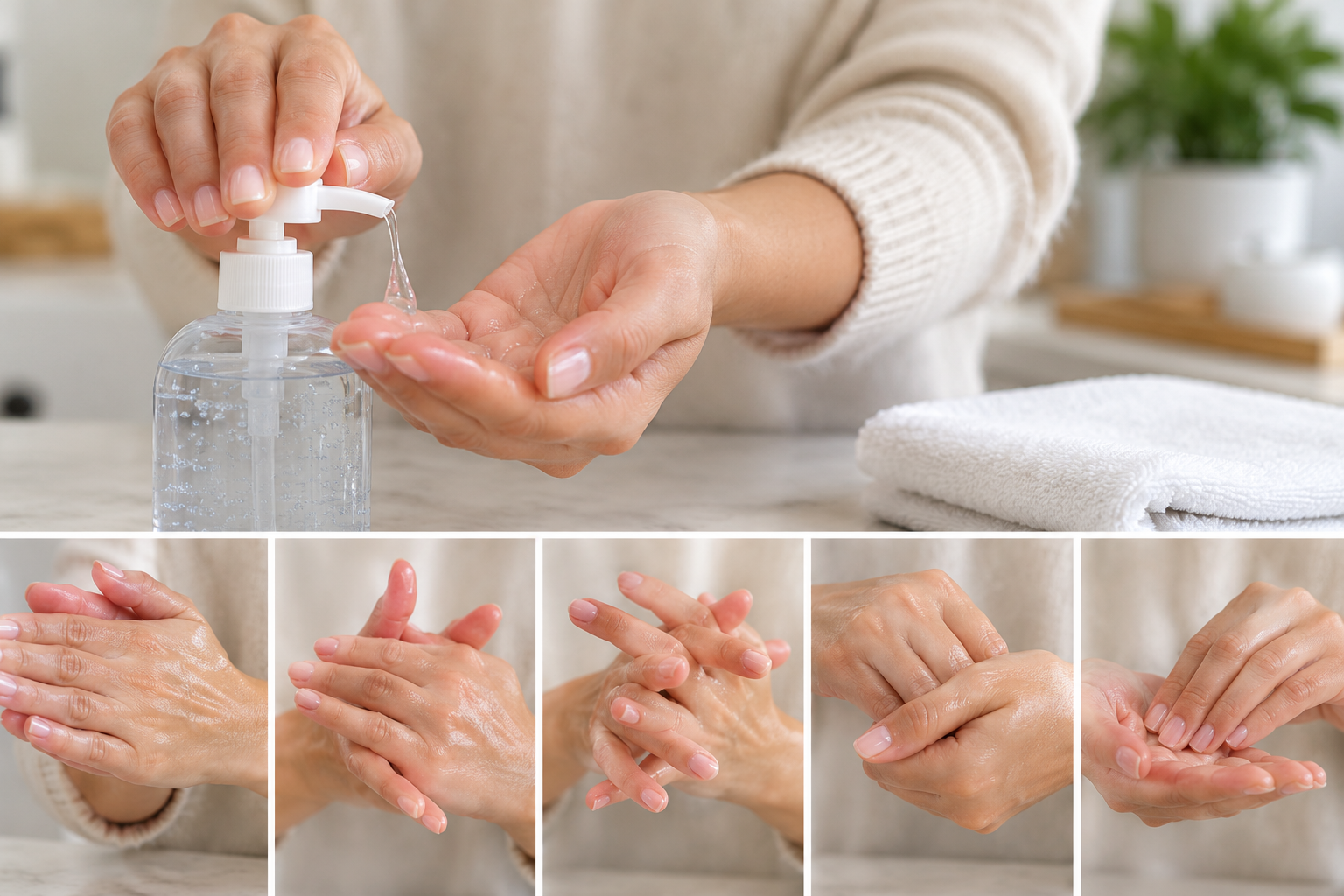
Use sanitizer as directed and rub all hand surfaces until dry; when hands are visibly dirty, use soap and water. Do not skip hygiene or wipe sanitizer off early to protect a manicure. The sources reviewed do not establish that routine sanitizer use dissolves every fully set press-on adhesive, so avoid claiming a guaranteed bond effect.
If sanitizer repeatedly precedes a specific edge lifting, compare the timing with other factors such as soaking, glove friction, product type, and an already raised edge. Dry hands fully, inspect the edge, and follow the adhesive maker’s care directions instead of adding glue over a damp or dirty gap.
Diagnostic table
| What you see | What it suggests | Next check |
|---|---|---|
| Only already-open edges worsen | Liquid reaches a pre-existing weak boundary | Correct fit and replace compromised nails |
| Failure follows application right after gel sanitizer | Preparation residue/incomplete drying possible | Use the press-on brand’s specified prep |
| Only one finger repeatedly fails | Local fit/activity more likely | Audit that finger’s width and curve |
| Intact nails tolerate sanitizer | Perimeter integrity is key | Remove/replace lifting nails promptly |
| Whole set changes during high-exposure work | Multiple work variables may contribute | Run a controlled reapplication without reducing hygiene |
| Routine sanitizer use | Hygiene remains the priority; a universal bond effect is not established | Rub hands until dry, then inspect any already-lifted edge |
A controlled test plan
- 1
Record which nails lift and exactly where during a normal high-sanitizer week.
- 2
On the next set, use the press-on manufacturer’s prep sequence rather than sanitizer as prep.
- 3
Keep fit, glue amount, and press time unchanged.
- 4
Inspect edges daily and note whether exposure affects only compromised perimeters.
- 5
Modify fit, length, or adhesive method—not required hygiene—based on the pattern.
What not to do
- Skipping necessary hand hygiene
- Using moisturizing sanitizer as a substitute for nail prep
- Assuming every alcohol exposure instantly dissolves cured glue
- Leaving an open edge through repeated wetting
- Adding more glue without finding why the perimeter opened
Worked troubleshooting example
Dana worked in a clinic and blamed sanitizer because her right index press-on lasted only two days. The other nine usually remained attached.
Before the next application she found that the index shell sat on skin along one side. She corrected the fit and used the press-on brand’s normal prep instead of her moisturizing sanitizer as a final wipe.
The nail then tolerated her normal hygiene routine, showing that her repeated single-finger failure had been local perimeter geometry rather than proof that sanitizer universally dissolved the glue.
Field notes
Sanitizer-heavy jobs often change several wear variables at the same time. That is why a one-finger versus all-fingers pattern matters.
A clean, dry, sealed perimeter at application gives a more useful baseline than trying to count individual sanitizer pumps.
Frequently asked questions
Should I stop using hand sanitizer while wearing press-ons?
No. Do not reduce required hygiene. Adapt length, fit, preparation, or adhesive method instead.
Can I prep nails with hand sanitizer?
Use the press-on brand’s specified preparation. A hand sanitizer is not automatically equivalent to a dedicated alcohol prep pad.
If sanitizer seems to worsen lifting, what should I check first?
Look for an already-open sidewall or cuticle edge and verify that the nail was clean and dry at application.
Sources checked
Sources below are page-specific. We prioritize manufacturer directions for product-specific steps and use medical or dermatology guidance when a safety question requires it. Always follow the instructions for the exact adhesive or set you own.