Why Does Press-On Nail Glue Smell Strong, and When Are the Fumes a Problem?
Distinguish a brief adhesive odor from excessive cyanoacrylate exposure, glue overflow, and eye or respiratory irritation.
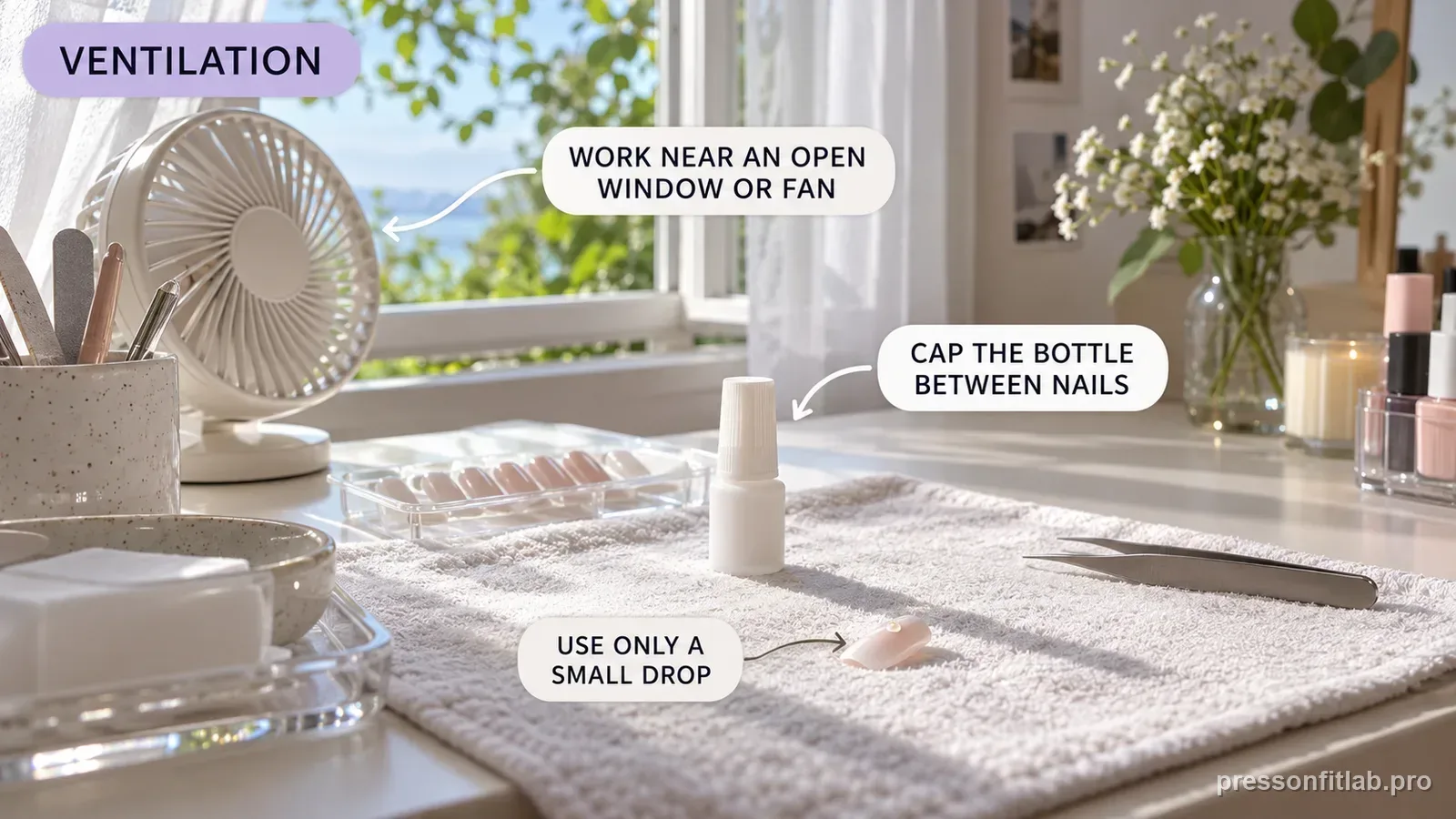
Many press-on glues use cyanoacrylate chemistry, and its liquid or vapor can irritate eyes and the respiratory tract. A detectable brief odor is different from tearing, burning eyes, coughing, throat irritation, wheezing, chest tightness, or difficulty breathing. Use small controlled amounts with good ventilation and stop exposure if irritation develops; serious breathing symptoms need urgent medical care.
Check these first
- ✓ Are your eyes watering or burning during application?
- ✓ Are you coughing, wheezing, or feeling throat/chest irritation?
- ✓ Is glue visibly pooling outside the intended contact area?
- ✓ Are you applying in a small closed room?
- ✓ Does odor persist because exposed uncured glue remains around an edge or spill?
Cyanoacrylate vapor can irritate
Poison Control notes that cyanoacrylate in liquid form and its fumes can irritate the skin, eyes, and respiratory tract. That makes ventilation a safety variable, not a cosmetic preference.
Cyanoacrylate odor and vapor exposure are most relevant while the adhesive is liquid and polymerizing. Poison Control notes that cyanoacrylate can irritate skin and eyes in liquid form and when fumes are inhaled, while dried cyanoacrylate is chemically inert. That makes uncured product quantity and ventilation central to the diagnostic picture.
Strong smell is not a fit test
Odor intensity does not tell you whether the shell is correctly sized or whether the bond will last. A poor fit can indirectly increase exposure when a user tries to fill a large gap with extra glue.
A large interior void changes exposure because users often dispense enough glue to create a reservoir. The goal of fitting is to make a thin bond line possible. If the shell rocks several millimeters above the nail and only a puddle can bridge it, discard that fit attempt rather than treating glue volume as structural filler.
Excess product creates unnecessary exposure
A well-fitting shell needs controlled adhesive coverage, not a reservoir. Glue that squeezes onto skin or remains exposed around the edge adds exposure without creating useful nail-to-shell contact.
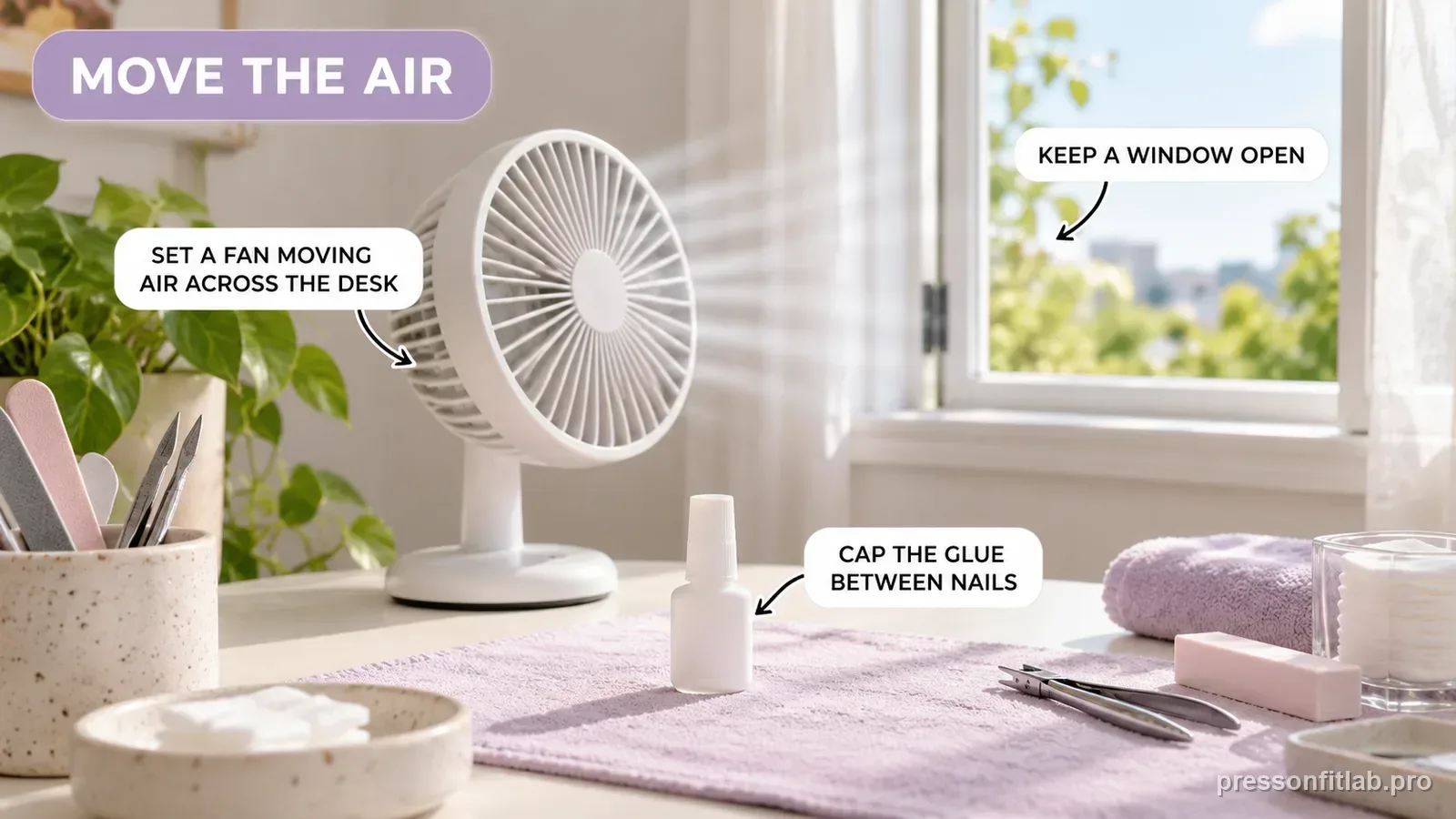
FDA's general nail-product guidance explicitly recommends good ventilation. In practice that means a normal room with air exchange and your face out of the immediate vapor plume—not blowing directly across wet adhesive, which can move fumes toward your eyes or disturb alignment before the shell is seated.
Ventilation matters during application
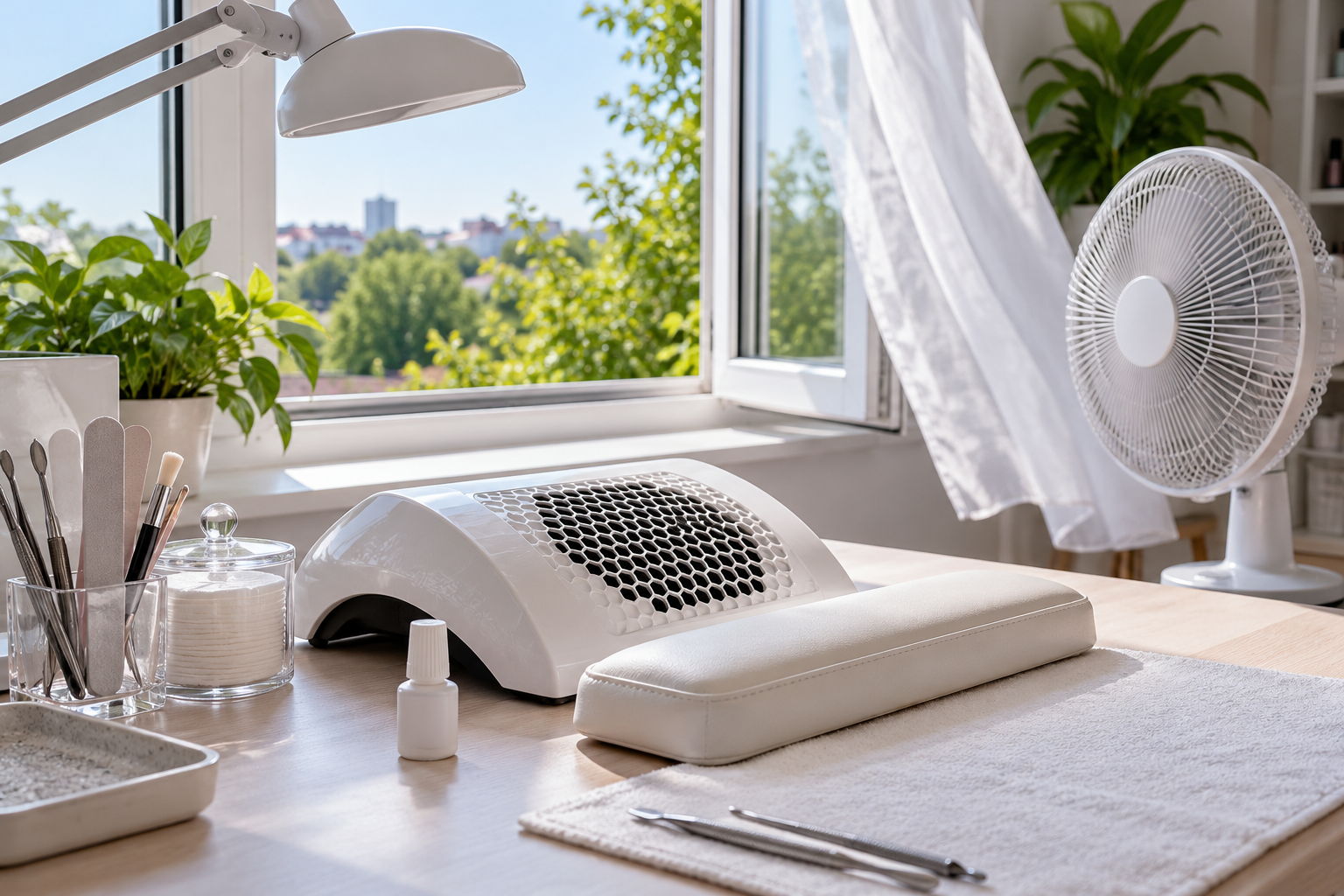
Work in a well-ventilated area, keep your face away from the open bottle and bond line, and cap the adhesive promptly. If irritation develops, stop application and move to fresh air.
Eye watering is a concrete stop sign even if the smell itself seemed tolerable. Move away, ventilate, and avoid continuing nail by nail. If liquid adhesive enters the eye or bonds eyelids, use poison-control or medical guidance rather than solvent experiments; Poison Control advises irrigation for eye exposure and says not to force sealed eyelids open.
Symptoms matter more than odor alone
Tearing, eye burning, coughing, wheezing, or chest/throat irritation means the exposure is affecting you. Persistent or significant symptoms warrant medical guidance, and severe breathing difficulty is urgent.
Be careful with cleanup materials. Poison Control warns that cyanoacrylate can react with cotton or wool and generate heat. That means an adhesive spill should not automatically be wiped with a cotton pad simply because cotton pads are common manicure tools. Follow the glue label and poison-control guidance for accidental exposure.
Persistent odor after application deserves inspection
Look for squeeze-out, spills, or a large gap with exposed adhesive rather than probing under the shell. Pain, heat injury, or skin reaction is a reason to stop the application safely, not wait for the smell to disappear.
Persistent respiratory symptoms need a different endpoint from ordinary application troubleshooting. Coughing, wheeze, chest tightness, or difficulty breathing are reasons to stop exposure and obtain appropriate medical help. The article should never imply that adapting to the smell is part of learning to apply press-ons.
Respond to symptoms, not odor strength alone
Use only the amount and method on the product label in a well-ventilated room, keep the bottle capped between uses, and avoid holding the open bottle close to your face. A noticeable smell by itself cannot measure exposure or diagnose a reaction; irritation of the eyes, nose, throat, skin, or breathing is the signal to stop and move to fresh air.
Do not continue application to “get used to” irritation. Follow the label for accidental contact and seek urgent help for trouble breathing or a serious eye exposure. FDA advises good ventilation when using nail products and notes that reactions can occur.
Diagnostic table
| What you see | What it suggests | Next check |
|---|---|---|
| Brief odor without symptoms | Uncured adhesive vapor may be detectable | Use controlled product and good ventilation |
| Eyes water or burn | Vapor irritation | Stop, ventilate, and move to fresh air |
| Strong odor plus squeeze-out | Excess exposed adhesive | Use less product and correct fit |
| Cough, wheeze, chest tightness, breathing difficulty | Respiratory irritation or more serious reaction | Stop exposure and obtain appropriate medical care |
| Persistent odor around one nail | Possible exposed excess adhesive | Inspect safely and discontinue that application if needed |
| Eye, throat, skin or breathing irritation | Stop application and leave the exposure area | Move to fresh air; follow label/contact guidance and seek urgent help for breathing trouble |
A controlled test plan
- 1
Move application to a well-ventilated area.
- 2
Use the manufacturer-recommended amount on one test nail.
- 3
Keep your face back and note any eye, throat, or respiratory symptoms.
- 4
Inspect the finished perimeter for squeeze-out.
- 5
Stop the test completely if meaningful irritation develops.
What not to do
- Applying in a poorly ventilated enclosed room
- Holding the glue bottle directly beneath your face
- Flooding gaps under a badly fitting shell
- Ignoring tearing, coughing, wheezing, or breathing difficulty
- Assuming a stronger smell means a stronger bond
Worked troubleshooting example
Jamie noticed a sharp glue odor and watering eyes whenever she applied her thumbs. She was using large drops because both thumb shells rocked in the center.
She stopped, ventilated the room, and later selected flatter thumb shells that sat without a central void. The better fit required much less adhesive.
She also kept her face farther from the work area and treated any return of eye or respiratory irritation as a reason to stop rather than push through.
Field notes
The most common mechanical reason users apply far too much glue is a shell with a visible void. Correct geometry reduces both the amount of adhesive needed and the amount available to squeeze out.
Ventilation and fit work together: a good fit permits a thin bond line, while a safe workspace reduces avoidable vapor exposure.
Frequently asked questions
Is nail-glue smell toxic?
Cyanoacrylate vapor can irritate eyes and the respiratory tract. Odor alone does not establish poisoning, but irritation symptoms should not be ignored.
Why do my eyes water when I use nail glue?
Cyanoacrylate fumes can irritate the eyes and provoke tearing. Stop exposure and improve ventilation.
Does more ventilation make the glue weaker?
Proper ventilation is a safety measure. Follow the adhesive instructions rather than reducing airflow to chase hold time.
Sources checked
Sources below are page-specific. We prioritize manufacturer directions for product-specific steps and use medical or dermatology guidance when a safety question requires it. Always follow the instructions for the exact adhesive or set you own.