Is This an Allergic Reaction to Press-On Nail Glue?
Separate pressure discomfort from possible contact dermatitis and know when nail-glue exposure should stop.
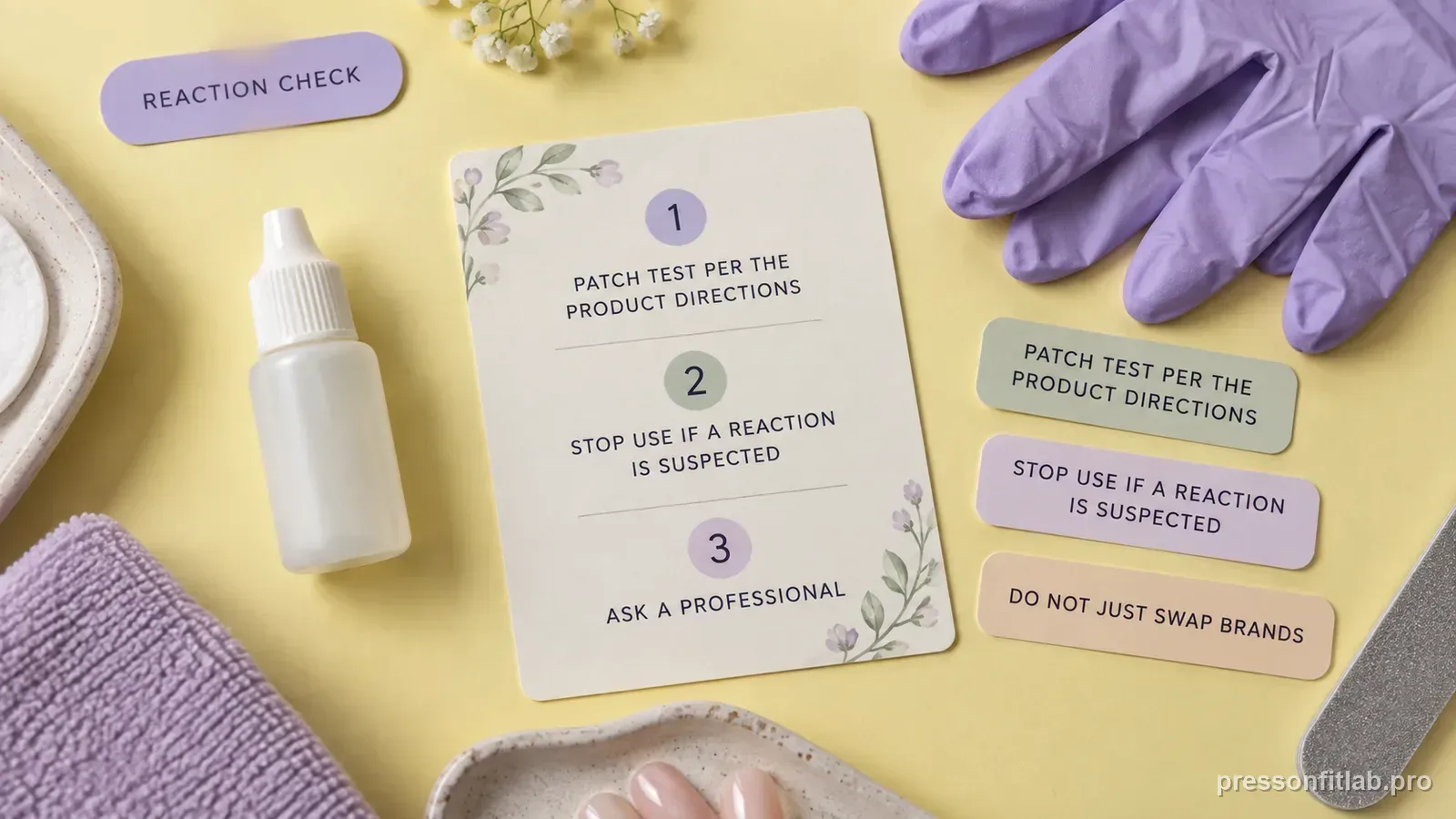
Redness, swelling, itching, blistering, or rash after nail-glue exposure should not be treated as a normal part of press-on wear. Many press-on glues contain ethyl cyanoacrylate, and nail-cosmetic reactions can affect fingers or areas such as the eyelids and face after hand contact. Stop the suspected exposure and seek medical advice for significant, persistent, spreading, blistering, or recurrent reactions; breathing difficulty or major facial or throat swelling needs urgent care.
Check these first
- ✓ Is the problem mainly itching, rash, swelling, or blistering rather than pressure under the shell?
- ✓ Did glue squeeze onto cuticle or side skin?
- ✓ Did a rash appear on eyelids, face, neck, or another touched area?
- ✓ Has the same reaction happened after earlier nail-glue use?
- ✓ Are there breathing symptoms, severe swelling, or widespread hives?
Separate mechanical pressure from skin inflammation
An undersized or over-curved press-on can hurt without producing dermatitis. A contact reaction is more likely when discomfort is accompanied by visible redness, itching, swelling, bumps, blistering, or a persistent rash.
Pressure pain and dermatitis often feel different in time and distribution. A shell that is too curved may ache immediately and mainly under that one nail. Allergic contact dermatitis can appear hours later and may affect several periungual areas, with itching and visible rash becoming more prominent than deep pressure. That timing is not diagnostic by itself, but it helps decide which branch to investigate.
Cyanoacrylate is common in press-on glue
KISS lists ethyl cyanoacrylate in its supplied nail glue, illustrating how common this chemistry is in press-on systems. Nail-cosmetic allergy guidance also documents allergic and irritant reactions to manicure materials.
The ingredient label matters because ‘nail glue’ is a product category, not a single chemical. Glamnetic, for example, lists ethyl cyanoacrylate in its press-on nail glue, and published case reports document contact allergy to ethyl cyanoacrylate nail adhesives. Saving the exact package gives a dermatologist something specific to evaluate instead of a vague brand memory.
Skin contact is unnecessary exposure
A properly fitted shell should end at the nail margins rather than on surrounding skin. Glue that repeatedly squeezes onto cuticles or sidewalls increases direct exposure without improving the contact geometry.
Fit still matters after you recognize the medical branch because overflow is a preventable exposure route. A shell that is too large can trap adhesive against skin; a shell with a center gap encourages users to overfill. Correcting those mechanical errors reduces accidental exposure, but it should never be presented as a way to make a confirmed allergen safe.
A suspected allergy changes the strategy
Once allergy is suspected, simply using a smaller amount of the same product is not a dependable solution. Save the ingredient list and consider dermatology assessment; patch testing may be used to identify contact allergens.
Patch testing is a clinician-directed diagnostic tool, not a reason to conduct your own repeated glue trials. Contact allergy can worsen with re-exposure, and remote dermatitis can occur when allergen is transferred by the hands. If the reaction pattern is recurrent, the information value of another home application is low compared with simply stopping exposure.
Know when symptoms need prompt care
Marked swelling, blistering, spreading rash, significant pain, nail separation, or signs of infection warrant medical attention. Serious breathing difficulty or major facial or throat swelling is an emergency rather than a manicure troubleshooting problem.
A separate emergency branch is essential. Localized fingertip dermatitis is different from trouble breathing, marked facial or throat swelling, or rapidly spreading systemic symptoms. Those require urgent medical attention rather than manicure troubleshooting. Similarly, warmth, pus, or increasing tenderness can point toward infection rather than allergy alone.
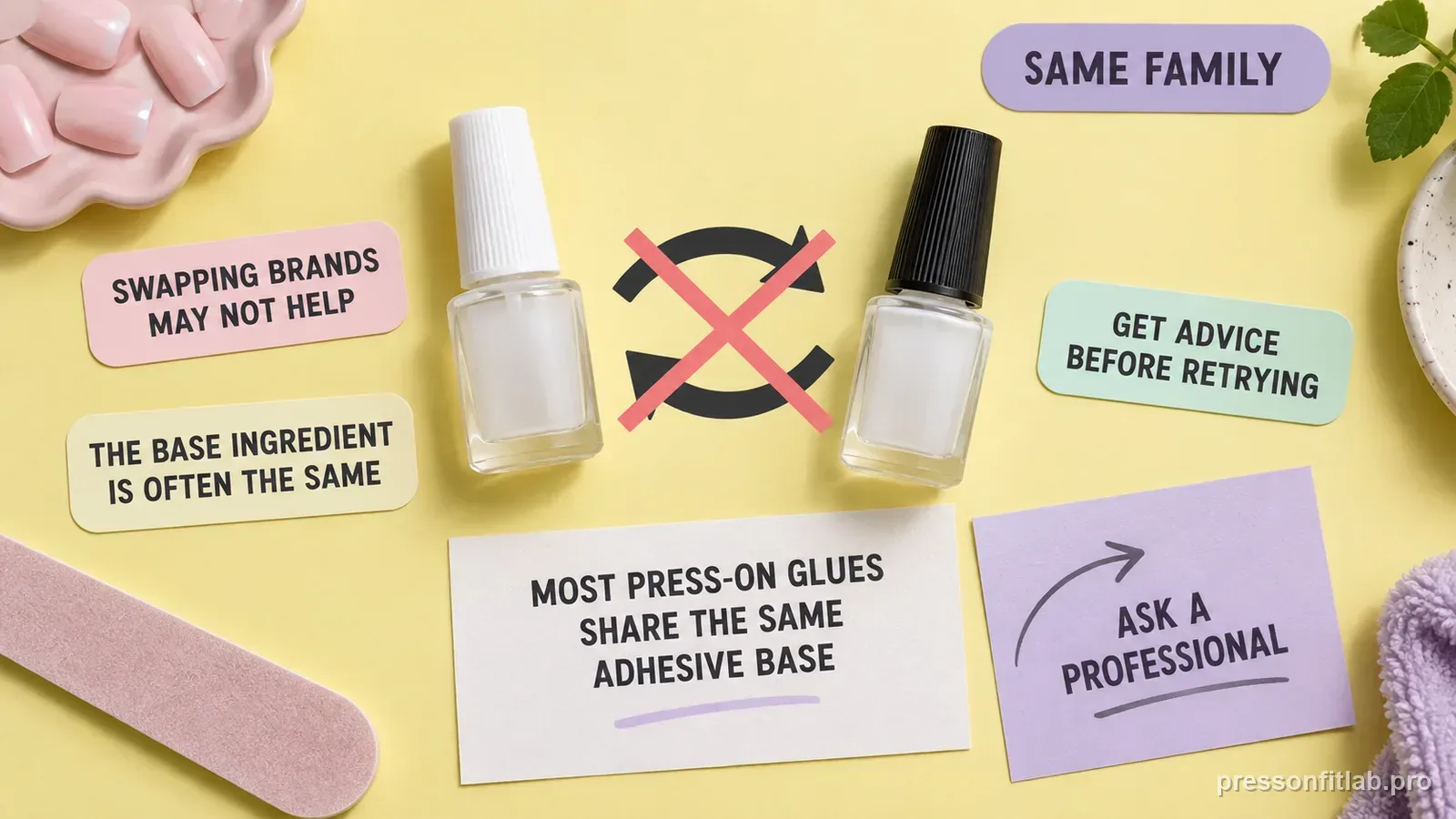
Do not blindly switch brands
Different products may use overlapping adhesive ingredients. Record the exact glue, ingredient list, timing, and symptom pattern instead of repeatedly exposing irritated skin to similar products.
If you later use a different attachment method, change one chemical system at a time and verify ingredients. Tabs can themselves contain adhesives capable of irritation. The durable lesson is ingredient avoidance based on the actual suspected or confirmed allergen, not the assumption that ‘tab’ automatically means hypoallergenic.
Diagnostic table
| What you see | What it suggests | Next check |
|---|---|---|
| Pressure pain without rash | Shell may be too small or too curved | Remove and reassess fit |
| Itchy red skin where glue overflowed | Irritant or allergic contact reaction is possible | Stop exposure and monitor/seek advice |
| Swollen or blistering fingertips | More significant dermatitis | Stop use and obtain medical assessment |
| Eyelid or facial rash after manicure | Transferred nail-cosmetic allergen is possible | Avoid further exposure and discuss with a clinician |
| Breathing difficulty or severe facial/throat swelling | Potential serious reaction | Seek urgent medical care |
A controlled test plan
- 1
Remove the artificial nail safely if the skin is reacting; do not pull bonded tissue apart.
- 2
Save the glue package and ingredient list and record when symptoms began.
- 3
Photograph the reaction if useful for a clinician.
- 4
Do not perform a home re-challenge when allergy is suspected.
- 5
For recurrent or significant reactions, obtain professional evaluation.
What not to do
- Calling visible swelling or blistering normal sensitivity
- Testing the same glue repeatedly on irritated skin
- Flooding poor-fitting shells with adhesive
- Assuming a different brand uses unrelated chemistry
- Using new adhesive tabs on actively inflamed skin without checking materials
Worked troubleshooting example
Carla felt mild pressure on two fingers but intense itching around three cuticles the morning after application. The itchy areas matched places where glue had squeezed out.
She safely removed the affected nails and saved the glue package. The pressure-only finger felt normal after removing its undersized shell, while the rash took longer to settle.
Because she had experienced a similar rash after a previous manicure, she sought medical advice instead of testing a smaller dose of the same glue.
Field notes
Fit and dermatitis can coexist: an oversized shell can force glue onto lateral skin, so a mechanical mistake increases chemical exposure. Correct sizing is preventive, but it does not make a confirmed allergen safe.
Rash away from the nails can be diagnostically important because fingers frequently touch eyelids, face, and neck.
Frequently asked questions
Is cyanoacrylate the same as gel-acrylate chemistry?
No. Nail systems use different chemical families and formulations, although more than one type can cause contact reactions in susceptible people.
Can I switch to tabs after reacting to nail glue?
Possibly, but wait until the skin is healthy and check the tab materials. A confirmed allergy should be managed around the identified allergen.
Should nail glue burn during application?
Persistent burning is not a normal fit target. Stop if you develop significant burning, tissue injury, or other reaction symptoms.
Sources checked
Sources below are page-specific. We prioritize manufacturer directions for product-specific steps and use medical or dermatology guidance when a safety question requires it. Always follow the instructions for the exact adhesive or set you own.