Press-On Nails Hurt After Application? Remove Pressure, Then Refit
Press-on nails should not require painful pressure. Learn the cosmetic fit problems that can create pinching or tension and when to stop forcing the set.
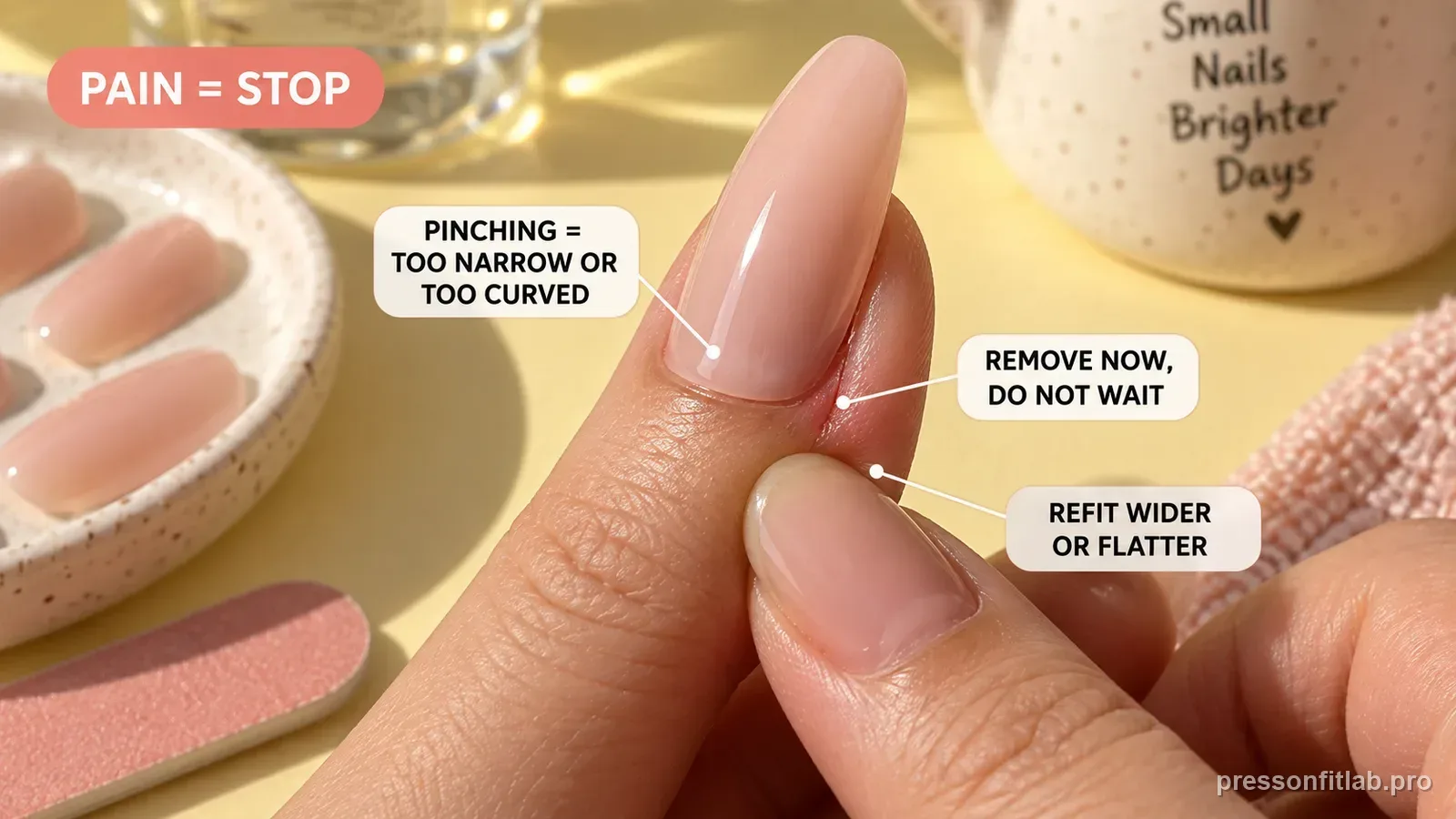
Pain or strong pinching is a reason to remove the press-on rather than “wait for it to settle.” Cosmetic fit causes can include a tip that is too narrow, too curved, sitting on skin, or being forced into a profile that does not match the nail. Pain, redness, swelling, injury, or other concerning nail/skin changes should not be treated as a normal fit-adjustment problem.
Check these first
- ✓ Does the tip hurt even during dry fit?
- ✓ Is the sidewall pressing into skin?
- ✓ Does the nail have to be forced flat?
- ✓ Does removing the press-on relieve the mechanical pressure?
A cosmetic press-on should not need painful force
Fit is successful when the artificial nail covers the nail plate comfortably and can be bonded without squeezing the finger or flattening the natural nail under tension. Pain is not a sign that the glue is “working.”
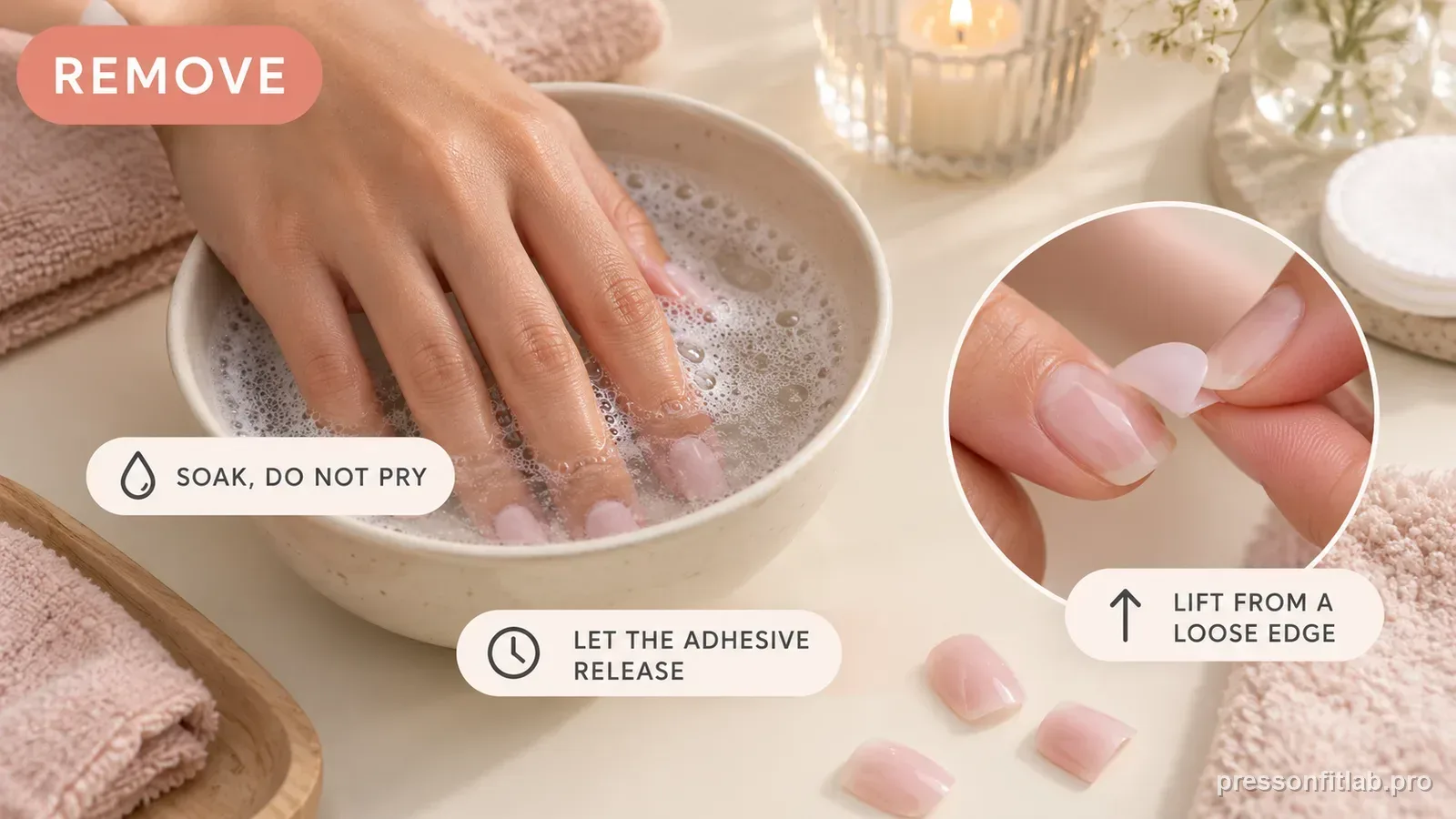
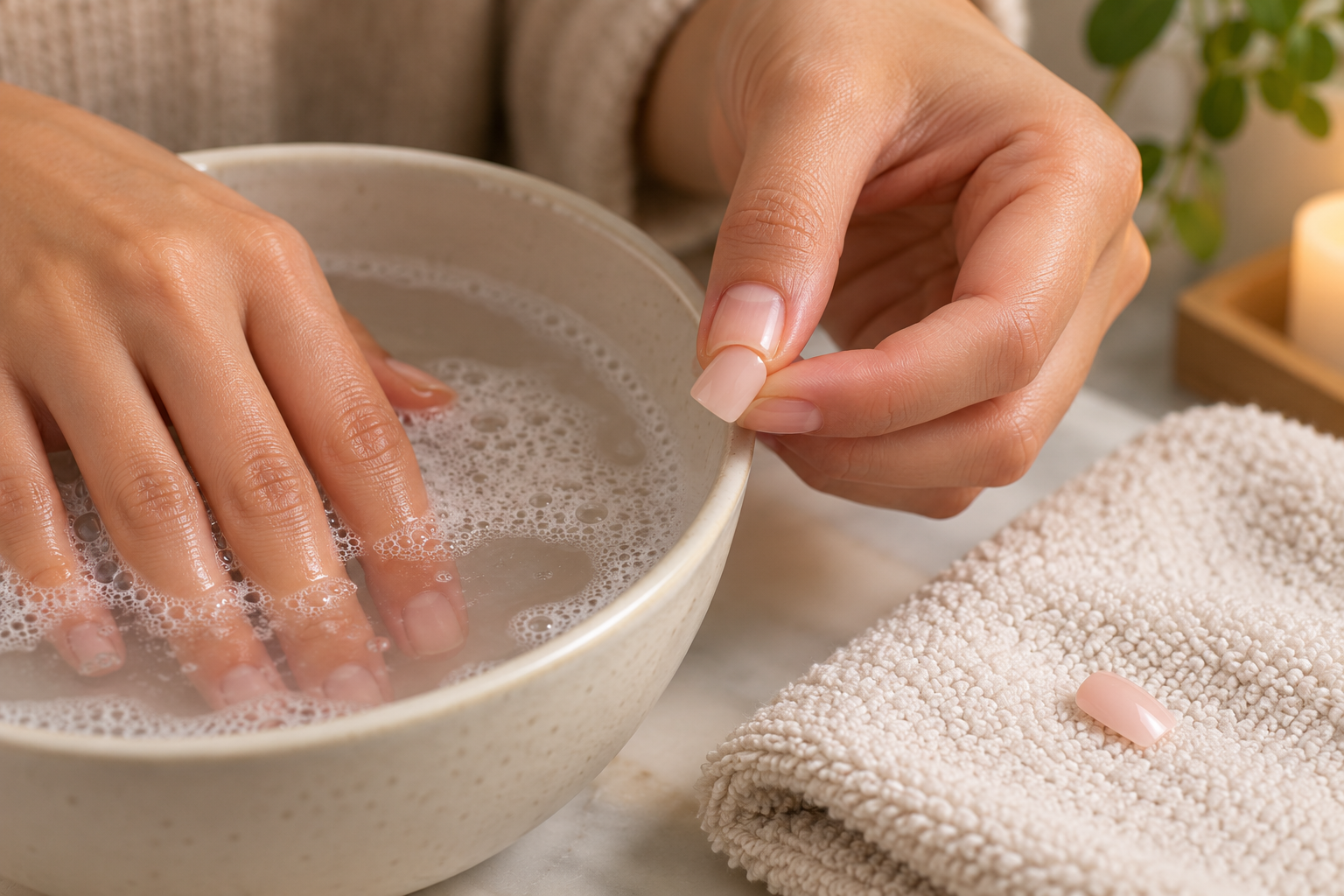
If a nail hurts, remove it using the product’s removal method. Do not keep pressing or clamping it down to chase longer wear.
Too narrow can pinch the sidewalls
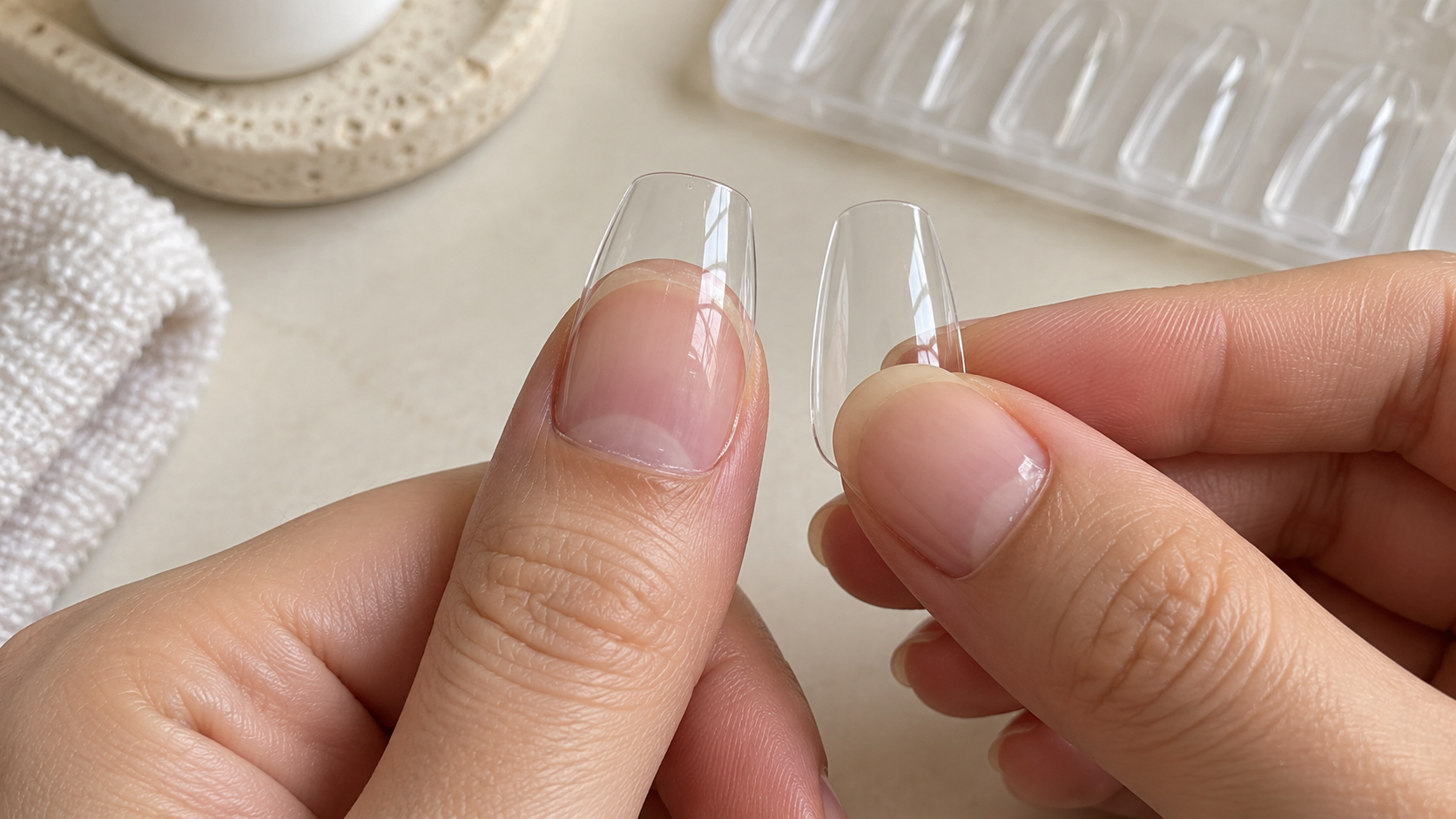
A narrow tip may appear neat from the top but press inward at both sides. The feeling can become stronger once adhesive fixes the artificial shape in place. After safe removal and once the finger feels comfortable again, dry-fit the physically wider neighboring candidate. If it slightly overlaps skin, refine only the artificial edge when the material is intended to be filed; otherwise choose another size or mold rather than returning to the painfully small tip.
Too curved can create spring tension
A deep C-curve on a flatter nail may need constant downward force to keep the sides in contact. That mechanical tension can feel tight or pinchy even when the width number seems correct.
Compare a lower-curve or more flexible tip rather than relying on adhesive to hold a rigid mismatch.
Skin contact is a separate problem
A tip that is too wide or placed too low can sit on surrounding skin. Adhesive also should not be applied onto skin. Refit so the press-on remains within the natural nail boundary.
If there is irritation, redness, swelling, persistent pain, or concern about an allergic reaction or injury, stop cosmetic troubleshooting and seek appropriate medical advice.
Rebuild the fit from zero
Once the uncomfortable nail is off, measure that finger again and inspect it independently from the rest of the hand. The correct solution may be a different size, different curve, or different tip family.
Do not assume the matching finger on the other hand is identical. Small left/right differences are common enough to matter when a tip is already close to the limit.
Treat pain as a stop condition, not a wear-in period
Strong pinching, throbbing, or worsening pressure is not a useful sign that the nail will eventually conform. Remove the press-on according to the product directions and inspect the fit without adhesive. A comfortable press-on should not require the natural nail or surrounding skin to absorb continuous mechanical pressure.
If discomfort persists after removal or there is irritation, swelling, or another health concern, stop cosmetic troubleshooting and seek appropriate medical advice. This fit process is for comfortable cosmetic application, not medical diagnosis.
Re-check the natural nail after removal
After the press-on is safely off, give the finger time to return to a neutral feel before testing another tip. If tenderness remains, do not immediately reapply a different artificial nail just to continue the experiment. Cosmetic fit testing should start from a comfortable baseline; persistent pain, irritation, or swelling is outside the scope of ordinary sizing troubleshooting.
Do not use pain as a wear-in test
A press-on should feel secure without sustained pinching, throbbing, or sharp pressure. If pain starts immediately, remove the tip using the release method on that adhesive’s label; do not pry, peel, or force a tight tip off. The fit table above is a way to choose the next dry-fit candidate after the natural nail is comfortable again.
If pain remains after removal, or the bare nail is swollen, bleeding, separated, or increasingly tender, pause cosmetic application and ask a qualified clinician. A fit guide cannot identify an injury or infection.
Diagnostic table
| What you see | What it suggests | Next check |
|---|---|---|
| Pinches both sides | Too narrow or too curved | Remove and refit. |
| Pressure at center | Profile/placement tension | Remove, dry-fit, and compare another profile. |
| Base presses skin | Too wide/too low | Keep artificial nail on nail plate. |
| Pain persists after removal | Not a cosmetic fit question | Seek appropriate medical advice. |
| Sharp or persistent pain | Stop wearing the tip; do not use it as a wear-in test | Follow the adhesive label for gentle release; seek clinical advice if pain or visible injury persists |
A controlled test plan
- 1
Remove the uncomfortable nail using product directions.
- 2
Re-measure that finger.
- 3
Check width and curve separately.
- 4
Dry-fit a relaxed alternative.
- 5
Stop DIY troubleshooting for persistent symptoms.
What not to do
- Waiting for painful pressure to “settle.”
- Clamping a rigid mismatch.
- Applying adhesive onto skin.
Worked troubleshooting example
Example: two nails begin pinching within minutes of application, especially along both side edges. You remove them according to the product directions instead of waiting for the discomfort to 'settle,' and you do not reapply while the fingers are still tender.
Once the nails feel normal again, you dry-fit the same tips without adhesive and see that both must be forced to cover the nail plate. The next larger candidates cover the width more comfortably. Because that tip material is designed to be filed, you refine only the artificial side edges and confirm a neutral dry fit before considering reapplication.
If the physically wider candidate still created pressure because of a deeper C-curve, the next step would be a different profile rather than more filing. Pain or strong pinching is a stop signal, not a fit test to endure.
Field notes
Comfort is a hard requirement, not an optional tradeoff for longer wear. A tip that hurts before glue is already giving you the answer.
This page intentionally stops at cosmetic fit. Persistent pain, redness, swelling, discoloration, or suspected reactions should be evaluated medically rather than diagnosed through a nail-fit guide.
Frequently asked questions
Are press-on nails supposed to hurt at first?
No. Strong pinching or pain is a reason to remove and refit rather than wait for it to become comfortable.
Why does a press-on feel tight even though it covers my nail?
The tip may still be too curved or may be pressing into the sidewalls despite covering the width.
When should I stop troubleshooting at home?
If you have ongoing pain, redness, swelling, discoloration, or signs of a reaction or injury, remove the cosmetic product and seek medical advice rather than continuing fit experiments.
Sources checked
Sources below are page-specific. We prioritize manufacturer directions for product-specific steps and use medical or dermatology guidance when a safety question requires it. Always follow the instructions for the exact adhesive or set you own.