Why Reused Press-On Nails Fit Differently the Second Time
Diagnose second-wear fit changes by checking residue buildup, finger mix-ups, warping, sidewall filing, and natural-nail changes before switching sizes.
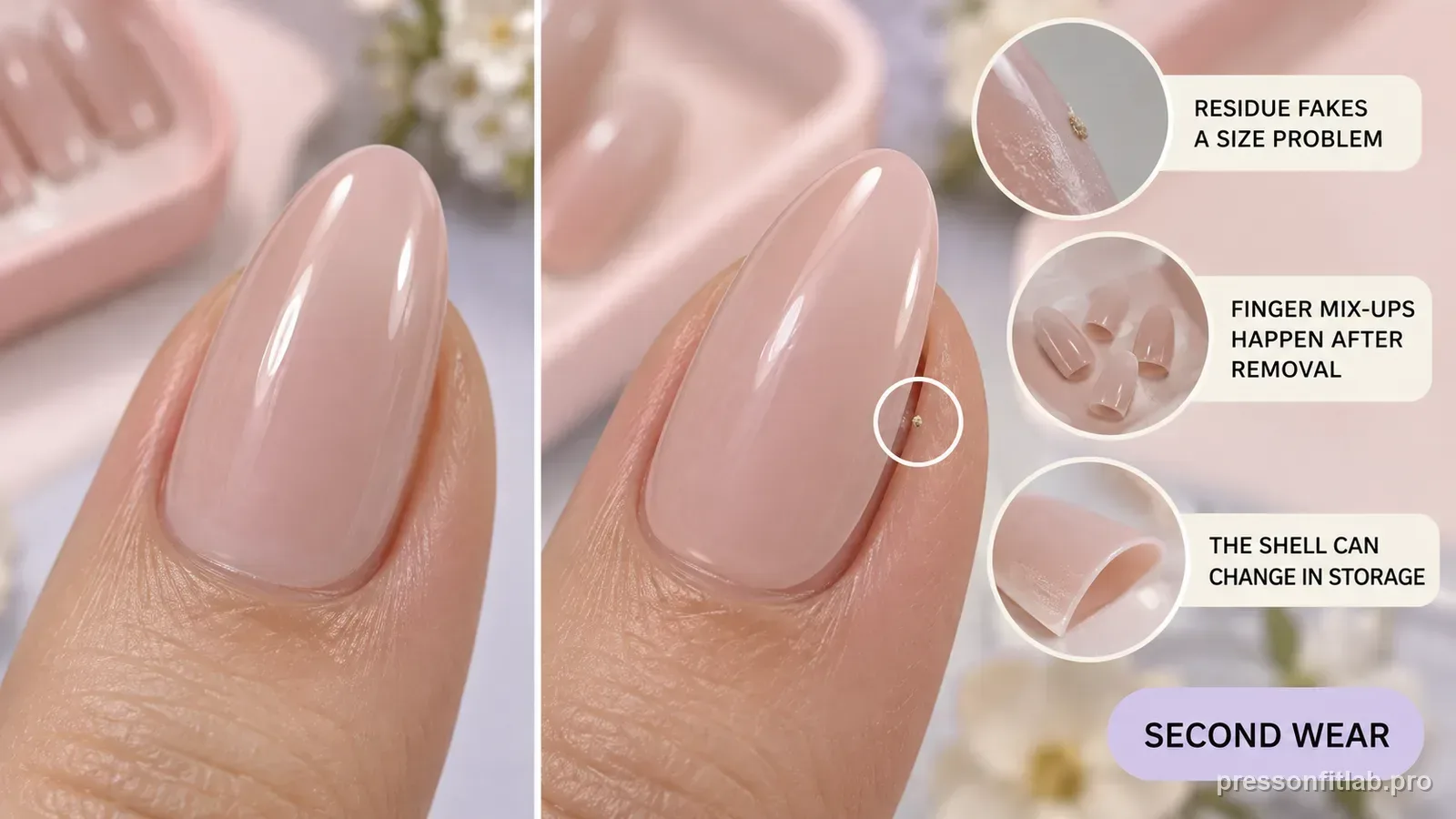
A reused press-on can feel different even when your original size was correct. Practical causes to check first include adhesive residue changing the underside, a nail being returned to the wrong finger, warping during removal or storage, or earlier filing that altered the sidewalls. Clean and dry the piece, confirm its label, compare its geometry with a spare, then dry-fit before deciding your natural nail “changed size.”
Check these first
- ✓ Is the underside completely free of old adhesive buildup?
- ✓ Are you certain the nail is back on the same left/right finger?
- ✓ Did the piece bend, warp, crack, or get heavily filed during its first wear?
- ✓ Has the natural nail grown, broken, or changed shape since the first application?
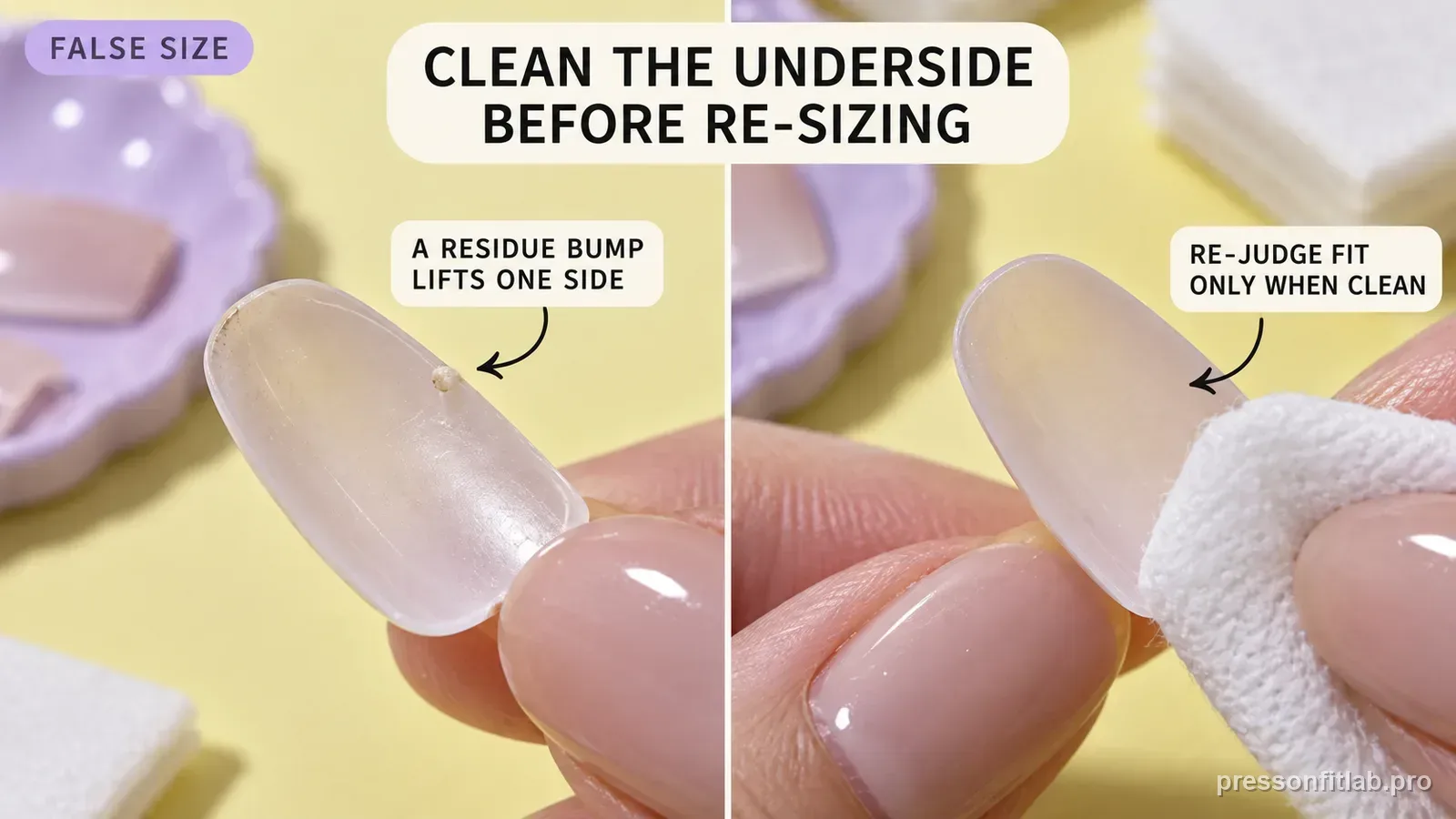
Residue can create a false size problem
Old glue or tab material adds thickness under the shell. That can make the cuticle edge sit high, create a center rock, or shift pressure toward one side. From above, the nail may still look like the correct width, which makes the new gap feel mysterious.
Clean the underside using the method supported by the set, dry it fully, and repeat the dry fit. If the geometry returns to normal, do not change the saved size. The problem was contact, not width.
Finger mix-ups are easy after removal
Ring and middle nails can look nearly identical when all ten pieces share the same design. Left and right hands may also differ slightly. A near-match piece can cover most of the nail and still produce side lift or a cuticle arc mismatch.
Use a labeled storage system. Before changing sizes or filing, confirm the press-on’s intended finger against your original profile.
Removal and storage can change the shell
A press-on that is twisted during removal, stored under pressure, exposed to conditions the product does not tolerate, or scraped aggressively can lose its original curve. A warped nail often behaves like a new fit category: side spring, center rocking, or pressure where none existed before.
Compare the suspect piece with an unused spare. If it requires force to sit flush, retire it rather than using a stronger adhesive to recreate the old fit.
Customization accumulates across wears
If you filed the sidewalls on the first wear, cleaned glue with a buffer on the second, and then filed again, the piece is no longer identical to the original. Small changes can compound until the cuticle arc or wall thickness no longer matches the finger.
Keep notes on meaningful customization. When a piece needs major rework every cycle, it may be more efficient to start with a better size range instead of repeatedly reshaping one tip.
The natural nail can also change
Natural nails grow, break, and can be trimmed differently between wears. The free edge and cuticle area may therefore present a slightly different surface. That does not usually justify random size changes, but it is worth checking after a long interval between reapplications.
Re-measure only after eliminating residue, mix-ups, and press-on damage. If the clean nail plate truly measures differently, update the profile using the same measurement method as before.
Diagnostic table
| What you see | What it suggests | Next check |
|---|---|---|
| Cuticle sits higher on second wear | Residue under base | Clean underside and dry-fit again |
| One side lifts unexpectedly | Wrong finger or warped shell | Confirm label; compare curve with spare |
| Nail feels tighter after repeated filing | Sidewall geometry changed | Retire/replace if customization is excessive |
| Several nails seem different after loose storage | Mix-up or storage pressure | Re-map fingers and inspect for warping |
| Natural nail was trimmed/broken | Contact surface changed | Recheck fit after other causes are ruled out |
A controlled test plan
- 1
Lay out the reused set by labeled finger position before touching the natural nails.
- 2
Inspect and clean every underside according to the product directions.
- 3
Compare any suspect piece with an unused spare from the free edge and side.
- 4
Dry-fit all ten and mark whether the change is width, curve, cuticle base, or length contact.
- 5
Only remeasure or choose a new size after residue, mix-ups, and damage have been excluded.
What not to do
- Assuming your fingers changed size because one dirty press-on sits high.
- Filing a second-wear side gap before checking whether the piece belongs to the other hand.
- Forcing a warped nail flat with stronger glue.
- Reusing a heavily thinned or cracked tip simply because the top design still looks good.
Worked troubleshooting example
Example: a reusable set fit perfectly in July. In August, the right middle nail rocks and looks too curved. You are about to try a physically wider candidate, but the underside still has a hard glue patch and the set was stored loose.
After cleaning, you realize the piece was actually the left middle nail. The correctly labeled right middle sits flush, while the old “problem” disappears without filing or changing glue.
You add left/right labels and a clean-dry-fit step to the reuse routine. Future fit changes can now be investigated without guesswork.
Field notes
Second-wear fit is a useful diagnostic because you already have a known first-wear baseline. Preserve that baseline with photos, labels, and millimeter notes so you can distinguish true change from cleanup or storage problems.
If all ten nails fit differently after reuse, look for a system-level step—removal method, residue, storage, or mix-up—before believing ten natural nails changed at once.
Frequently asked questions
Can my press-on size change between wears?
It can, but first rule out residue, a finger mix-up, or damage to the press-on. Natural-nail growth or breakage can also change contact over time.
Why does a reused press-on rock when it did not before?
Old adhesive buildup or a warped shell can change underside contact. Clean, dry, compare with a spare, and dry-fit before using more glue.
Should I file reused press-ons again every time?
Only if the product supports filing and a clean, undamaged tip genuinely needs minor adjustment. Repeated heavy filing can alter the geometry and reduce reusability.
Sources checked
Sources below are page-specific. We prioritize manufacturer directions for product-specific steps and use medical or dermatology guidance when a safety question requires it. Always follow the instructions for the exact adhesive or set you own.