Why Do Press-On Nails Fit or Hold Differently in Cold, Dry Weather?
Diagnose winter fit changes using nail hydration, dry surrounding skin, adhesive cure conditions, and fresh dry-fitting.
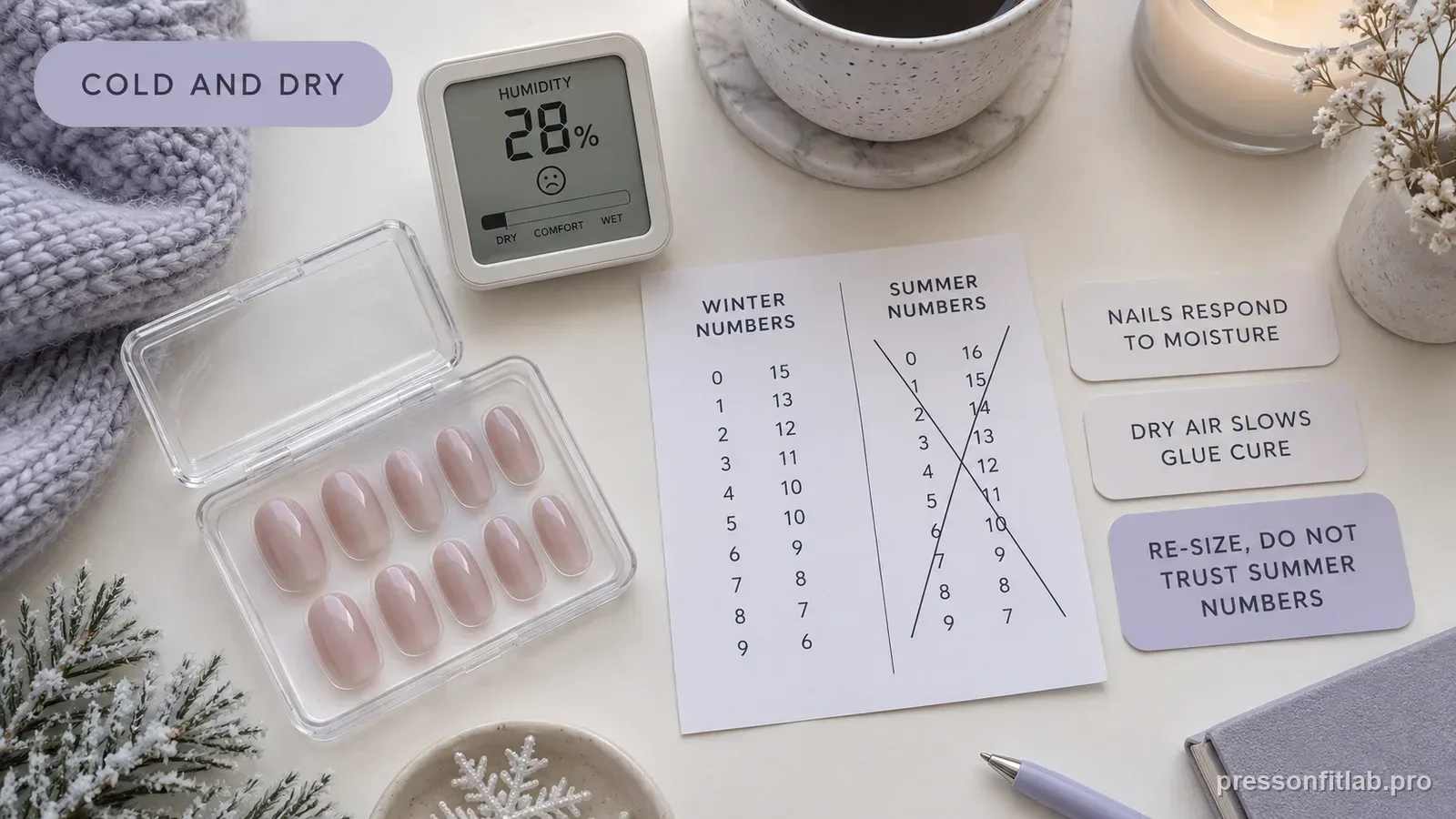
Cold, dry conditions can change nail and skin behavior and can also slow cyanoacrylate cure in dry winter air. Human nail fracture properties vary with humidity, but that does not justify a universal “winter shrinkage” percentage. Re-check fit, surrounding dry skin, product condition, and undisturbed hold time rather than automatically adding more glue.
Check these first
- ✓ Did failures begin after indoor heating or a major humidity drop?
- ✓ Are cuticles and sidewalls drier or rougher than usual?
- ✓ Does the same numbered shell now need more pressure to sit flat?
- ✓ Are products and hands unusually cold during application?
- ✓ Are you following the adhesive’s specified hold time without disturbing the shell?
Nails are moisture-responsive material
Laboratory research shows human fingernail moisture content and fracture behavior change with relative humidity. Very dry nails can become more brittle, so winter preparation should avoid unnecessary thinning.
The published humidity study is best used to support material responsiveness, not a claim that every nail shrinks a known amount in winter. Human nail becomes mechanically different as water content changes. That can alter how easily the plate bends under a rigid shell and how it tolerates aggressive buffing or long leverage, even if your ruler measurement looks unchanged.
Dry skin can alter the perimeter
Raised, cracked, or rough cuticle and sidewall skin can intrude beneath the artificial edge. Moisturize skin between manicures, but keep oil and lotion off the nail plate during bonding prep.
Dry periungual skin can create a false fit boundary. Flaking side skin sometimes creeps under the edge during application, and cracked cuticle tissue can make positioning uncomfortable. Improve skin condition between manicures, but keep oils off the plate immediately before bonding so solving dryness does not create a new surface-contamination problem.
Dry air can slow cyanoacrylate cure
Permabond notes that cyanoacrylate cure can slow in dry winter air. Follow the nail-glue manufacturer’s hold directions carefully and avoid shifting the shell while the initial bond develops.
Permabond specifically notes that cyanoacrylate cure can slow in dry winter air. That does not tell you the correct consumer nail-glue cure time, but it explains why disturbing the shell early is a poor idea. Use the nail-glue maker's hold instructions fully and avoid testing the bond by wiggling the tip immediately after placement.
Re-size instead of trusting summer numbers
A saved size map is a starting point, not proof of current fit. Natural growth, filing, product changes, and seasonal tissue condition can all alter how a shell sits.
Temperature can also change product viscosity and handling feel. Let hands and adhesive reach ordinary indoor conditions naturally before application. Do not warm a glue bottle with hot water, a heater, or a hair dryer; direct heating introduces safety and storage variables that are unnecessary for a manicure fit test.
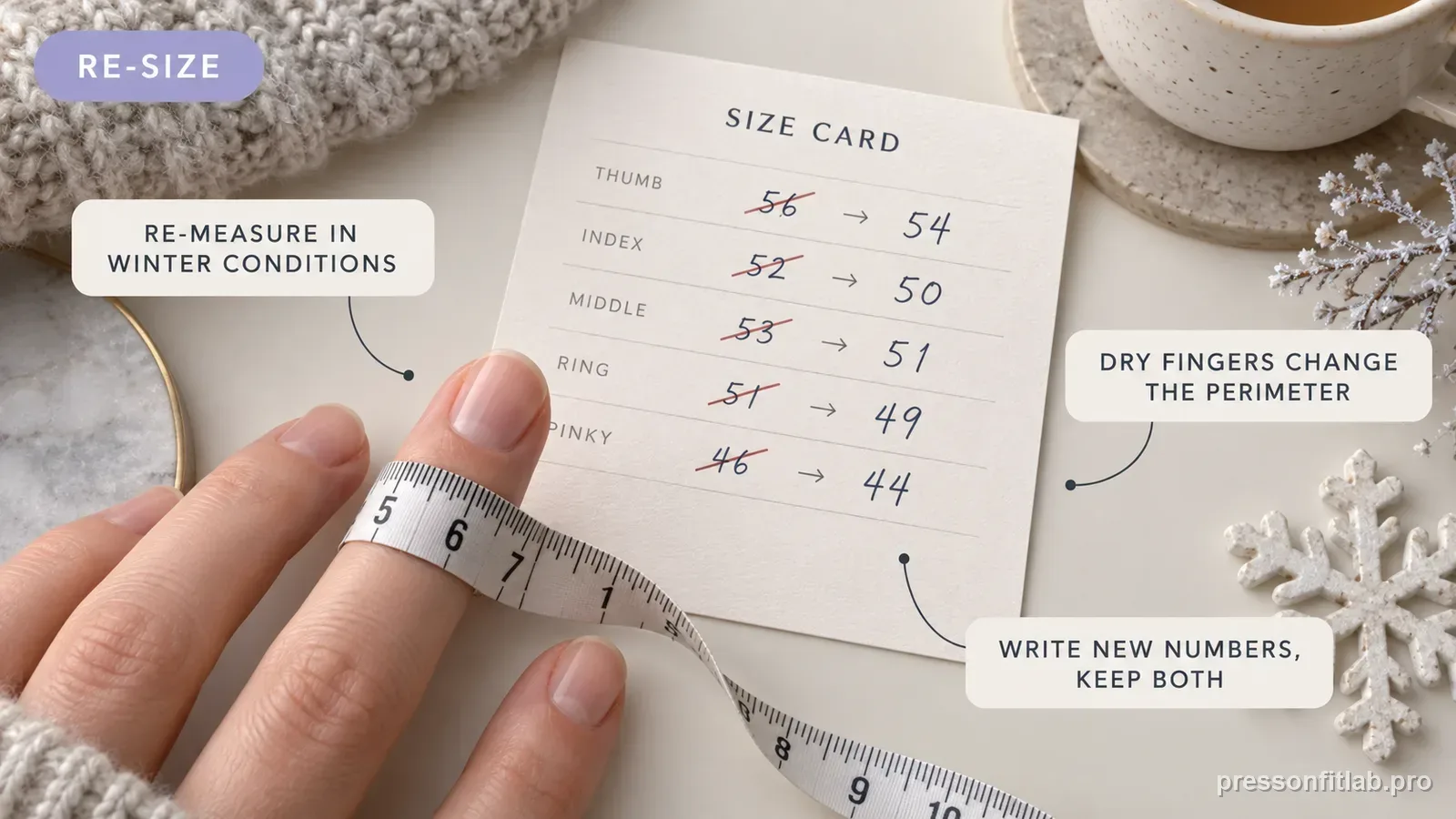
Let products reach normal room conditions naturally
Do not heat glue bottles or use improvised high heat. Follow storage directions and allow hands and products to normalize in a comfortable indoor environment.
A winter res sizing check should include side view, not just width. If the natural plate is drier and less flexible, a shell that previously relied on being pressed into shape may feel tighter. The correct fix is a shell that sits more neutrally, not longer application pressure to store more stress in the bond.
Use winter patterns as evidence, not certainty
If several nails begin failing at the same seasonal transition, record whether lift starts at dry skin, sidewalls, center, or an impact-prone edge. Location still determines the mechanical fix.
Track the first two or three cold-weather sets. If failures cluster only during one unusually dry period and then resolve when humidity changes while your fit and routine remain constant, that pattern is useful. If the same single finger fails year-round, seasonal conditions are probably secondary to its local geometry.
Diagnostic table
| What you see | What it suggests | Next check |
|---|---|---|
| Several nails lift after heating season begins | Humidity/cure conditions may have changed | Re-check fit and follow hold instructions carefully |
| Dry skin intrudes beneath artificial edge | Perimeter interference | Improve skin condition between sets and keep plate clean |
| Natural nail feels brittle during prep | Low-humidity mechanics may contribute | Reduce aggressive buffing |
| Old shell now needs strong pressure | Current fit changed | Dry-fit neighboring sizes/curves |
| Glue behaves unusually after poor storage | Product condition may be compromised | Follow manufacturer storage guidance and replace questionable product |
A controlled test plan
- 1
Dry-fit recorded sizes from scratch before the first winter set.
- 2
Apply one test nail in a normal room environment using exact prep/hold instructions.
- 3
Observe where the first lift begins.
- 4
Change only the implicated fit variable on the next attempt.
- 5
If the pattern is strongly seasonal, record room humidity as context without inventing a fixed threshold.
What not to do
- Claiming nails shrink by a universal winter percentage
- Heating nail glue directly
- Applying over cuticle oil or lotion residue
- Over-buffing a dry brittle plate
- Using extra adhesive to force a shell whose curve does not fit
Worked troubleshooting example
Rachel used the same shell numbers year-round, but in January three cuticle edges began lifting within two days. She initially planned to buy stronger glue.
A fresh dry fit showed two shells now pressed against rough side skin, and she had also been applying cuticle oil immediately before nail prep.
She restored the skin between sets, kept oil off the bonding surface, re-sized the two problem nails, and used the same glue according to instructions. The seasonal failure improved without escalating adhesive strength.
Field notes
Winter troubleshooting is strongest when nail hydration, skin condition, adhesive cure, and static fit are kept as separate variables.
The first set of a dry season is worth re-fitting from scratch even when you have a reliable size map.
Frequently asked questions
Do fingernails change with humidity?
Yes. Research shows nail moisture content and mechanical properties vary with relative humidity, but this does not support a simple fixed shrinkage formula.
Can nail glue cure slower in winter?
Cyanoacrylate cure can slow in dry conditions. Follow the specific nail-glue instructions rather than inventing a new cure schedule.
Should I moisturize before a winter press-on set?
Care for dry skin between sets, but prepare the nail plate clean and free of oil or lotion immediately before bonding.
Sources checked
Sources below are page-specific. We prioritize manufacturer directions for product-specific steps and use medical or dermatology guidance when a safety question requires it. Always follow the instructions for the exact adhesive or set you own.