Press-On Nails for Wide Nail Beds: A Better Fit Method
Measure wide nail beds accurately, choose enough coverage, and refine physically wider near-fit tips without creating a pinched or under-sized fit.
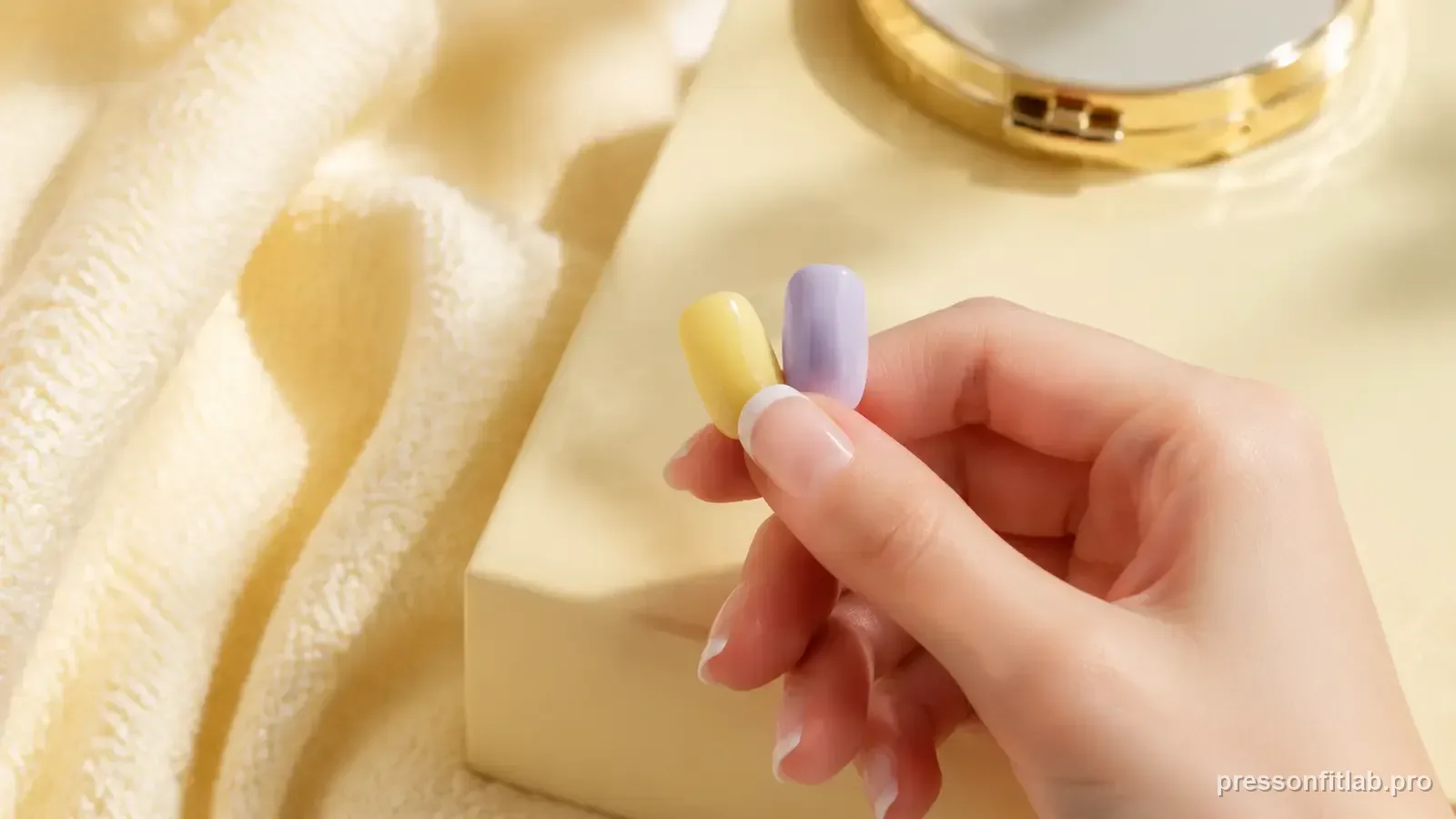
For wide nail beds, choose a tip that fully covers the natural nail from sidewall to sidewall. If you are between two candidates, dry-fit both and follow the exact product guidance. A physically wider near-fit may be refinable when its curve is comfortable and the manufacturer permits filing; a physically narrow tip that leaves exposed sidewall cannot be made wider.
Check these first
- ✓ Full sidewall coverage.
- ✓ No exposed strips of natural nail.
- ✓ No skin pinching.
- ✓ Thumb sizes checked separately.
Coverage is the first fit test
Look straight down at the nail. The press-on should cover the nail plate across its widest point without resting on surrounding skin. When the tip is too narrow, you may see exposed nail at one or both sides and the edge can become a lifting point.
Do not confuse a wide nail bed with a flat nail bed. Some nails are wide and highly curved; others are narrow and flat. Width and curve are separate measurements.
Measure instead of guessing from finger size
Finger width is not the same as nail-plate width. Measure each nail in millimeters and compare those values with the seller chart. This is especially important for thumbs, which vary widely between people.
Keep your measurements in your phone so you can compare future sets without starting from scratch.
Use the wider candidate only when the curve works
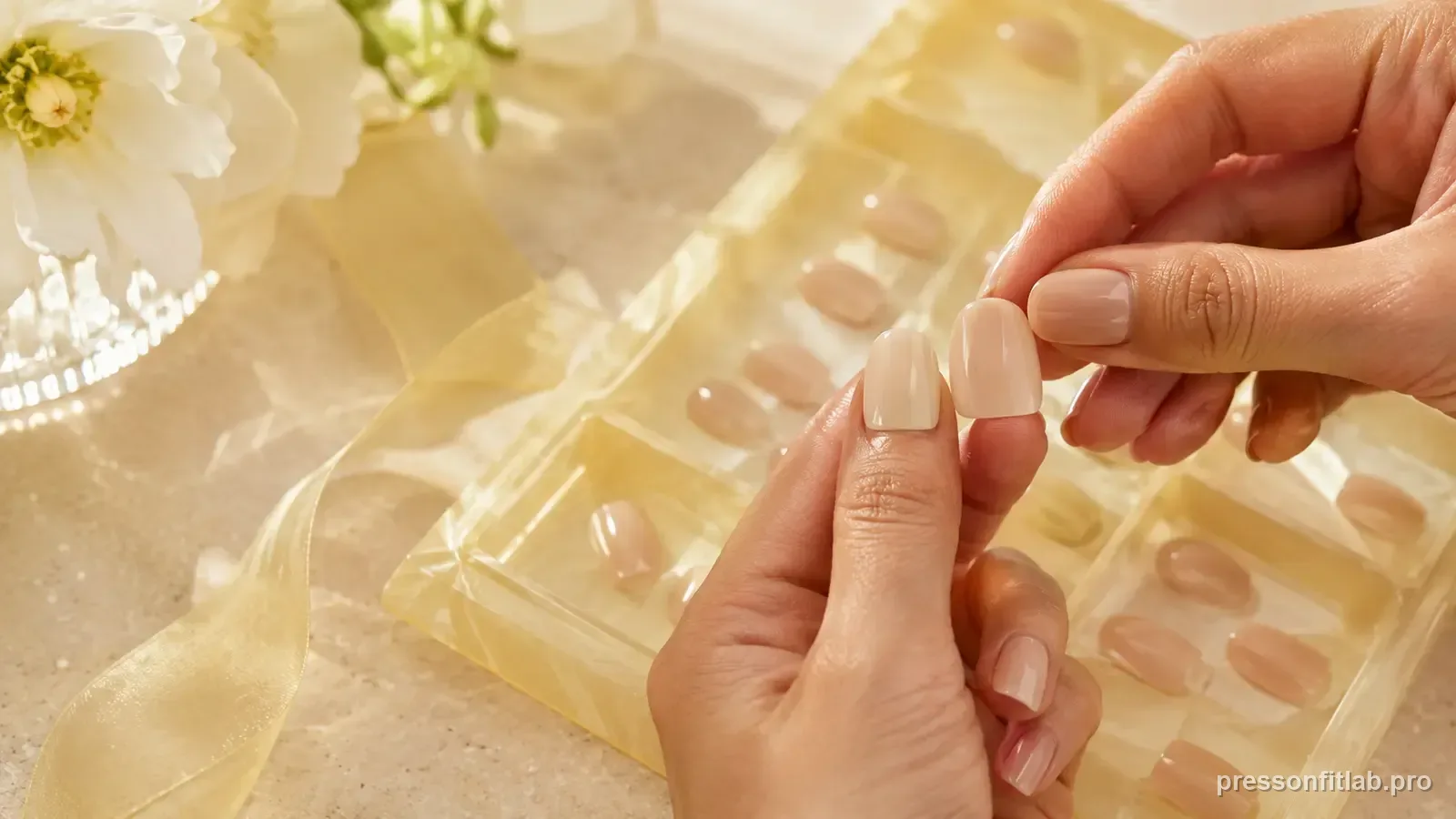
When two tips bracket your width, the physically wider candidate can be the better starting point if the tip material is designed to be filed and its curve sits comfortably. Use a fine file on the artificial side edges in small passes, checking symmetry and dry-fitting often. Do not keep a physically wider tip simply because it covers the width if its curve is painfully tight. A correct width with the wrong curve is still a poor fit.
Watch the cuticle shape too
Wide nail beds can have square, rounded, or strongly tapered cuticle lines. If the press-on base shape is very different, the corners may touch skin even when the width is right.
Small adjustments to the cuticle edge can help a close fit look more natural. Keep the edge smooth and avoid placing adhesive on skin.
Why wide thumbs fail first
Thumbs combine greater width with heavy daily use. If a kit has only one large thumb option, you may end up forcing a marginal fit. Look for sets with a broader size range or individual replacements when your measurements fall outside standard assortments.
After fit is corrected, apply the thumb carefully and give it the full pressure time recommended by the adhesive maker.
Diagnostic table
| What you see | What it suggests | Next check |
|---|---|---|
| Natural nail shows at both sides | Tip is too narrow | Look for a wider size range rather than centering the gap. |
| Physically wider candidate sits on skin | Tip is wide enough but needs refinement | If the product allows filing, refine the artificial sidewalls gradually while dry-fitting |
| Thumb is wider than the largest tip | Set lacks the size you need | Choose extended sizing or custom millimeter sizing. |
| Correct width feels pinchy | Curve is still too deep | Compare profile as well as width. |
| One hand needs different sizes | Normal left/right variation | Record and order per finger, not by a single preset label. |
A controlled test plan
- 1
Measure all ten nails in millimeters rather than guessing from a preset bundle label.
- 2
Find a set whose published width range actually covers your largest thumb and widest fingers.
- 3
Dry-fit the two closest physical-width candidates and compare sidewall coverage, skin contact, and curve before deciding.
- 4
If the product allows filing, refine only the artificial edge, a little at a time, until it follows the natural sidewall.
- 5
Recheck curve before application; a wide tip that is too arched can still lift.
What not to do
- Wearing a too-narrow tip with visible side gaps simply because it feels easy to apply.
- Filing so far inward that the press-on becomes narrower than the natural nail.
- Assuming “wide” marketing language means a specific millimeter range.
- Using preset sizes from one brand as proof of fit in another brand.
Worked troubleshooting example
Example: your ring finger measures wider than the largest tip that sits comfortably in the first set you try. Centering that tip leaves a visible strip of natural nail on both sides, while pressing harder does nothing because the missing width is physical, not adhesive-related.
A second set has a wider size range. Its larger ring-finger tip covers the plate but slightly overlaps at both side edges. Because that product permits filing, you refine the artificial sidewalls in small, equal passes and re-check after each pass. Once the tip covers nail plate without touching skin, you stop even though more material could be removed.
The important change was moving to a mold with enough starting width, not forcing the original tip to behave like a wider one. You save that set’s millimeter width and shape family for the ring finger so future purchases can be screened before application day.
Field notes
Wide nail beds reward brands that publish real dimensions. A set with more pieces is not automatically more useful if the largest mold still does not cover your thumb. Before buying, compare the actual width range whenever the manufacturer provides it.
If you are between widths, compare both physical candidates rather than assuming one printed size-number direction. A physically wider near-fit may offer material to refine when the product permits it, while a truly narrow tip cannot be made wider. The goal is full nail-plate coverage with no skin overlap and no forced curve.
Frequently asked questions
Should press-on nails be slightly wider than my natural nail?
They should cover the nail plate without resting on skin. If you are between candidates, dry-fit both and follow the exact product guidance; a physically wider near-fit is only a filing candidate when its curve is comfortable and the manufacturer permits that adjustment.
Why does my natural nail show at the sides?
The press-on is probably too narrow or not centered. Recheck width before application.
Are wide nail beds the same as flat nail beds?
No. Width describes side-to-side size; flatness describes curvature. You can have one without the other.
Sources checked
Sources below are page-specific. We prioritize manufacturer directions for product-specific steps and use medical or dermatology guidance when a safety question requires it. Always follow the instructions for the exact adhesive or set you own.