Nail Glue vs. Adhesive Tabs for Press-Ons
Compare glue and adhesive tabs by wear goal, fit quality, removal, flexibility, and the amount of surface contact your press-ons actually have.
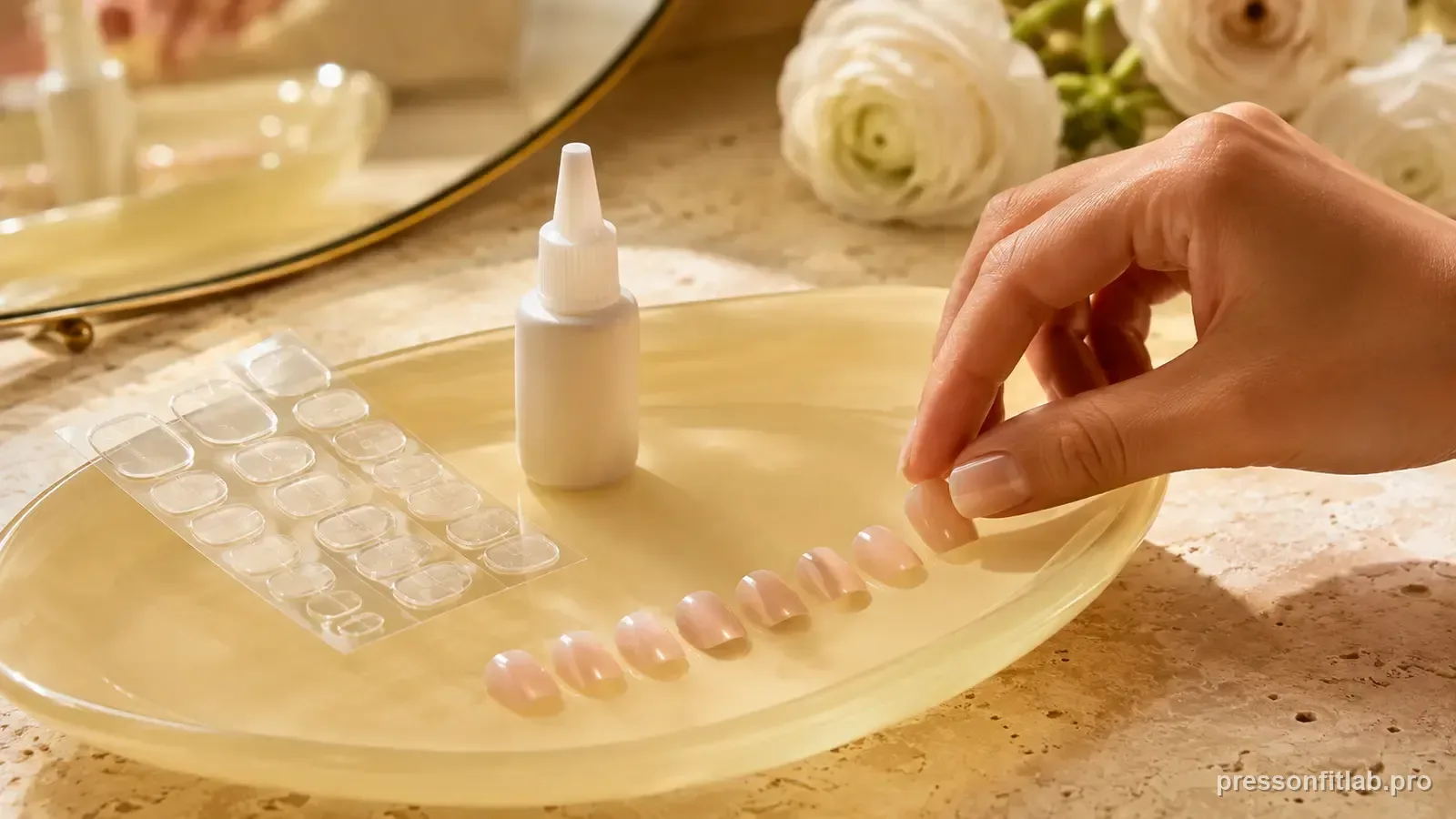
Adhesive tabs are convenient for shorter wear and easier removal when the tip already fits closely. Nail glue is commonly chosen when a firmer bond is the priority, but it requires more careful application and removal. Neither method fixes a badly sized or visibly mismatched tip.
Check these first
- ✓ How long do you want the set to last?
- ✓ Does the tip already sit flush?
- ✓ Do you plan to reuse the press-ons?
- ✓ Can you follow the removal method patiently?
Choose by wear goal, not by hype
Tabs and glue solve different problems. Tabs are appealing when you want a temporary set, quick changes, or easier reuse. Glue is usually selected when longevity matters more and the product instructions support longer wear.
Your actual results still depend heavily on fit and prep. A weak fit can make either adhesive look bad.
Tabs need close surface contact
A tab is a thin layer between two surfaces. If a very curved press-on sits over a flat nail with big side gaps, much of the tab may not be compressed between both surfaces.
For a well-matched tip, tabs can provide even contact and straightforward removal when used as directed.
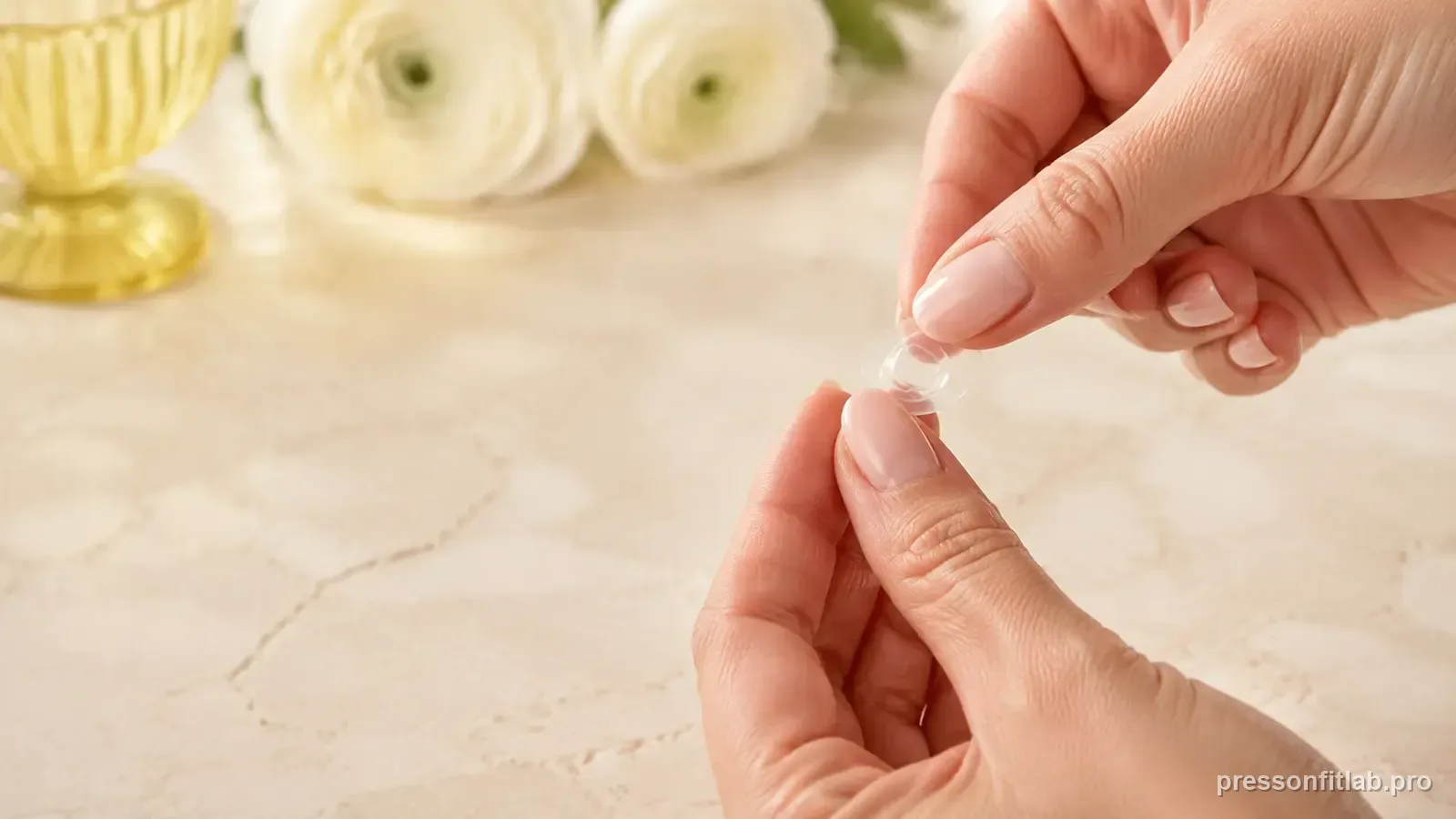
Glue can create a firmer bond but demands placement control
Liquid nail glue can spread across close-contact surfaces, and excess can make a tip slide before it is seated. The challenge is using the product-directed coverage while aligning the press-on accurately and keeping adhesive off skin; glue should not be used to bridge a visible profile gap.
When a product positions glue for a firmer or longer-wear attachment, removal should still be slow and follow that product’s directions rather than prying the press-on off.
What about using glue and tabs together?
Some users experiment with layered methods, but product systems are not all designed for mixing. Combining adhesives can change removal difficulty and may create uneven thickness.
If you want to combine methods, check the instructions from the specific products rather than assuming every glue and tab are compatible.
A simple decision rule
For an event or short wear where easy removal matters, start by testing tabs on a correctly fitted tip. For longer wear, follow a nail-glue system designed for press-ons. If either fails, revisit fit before escalating adhesive strength.
Keep notes on what you used; it is much easier to improve a repeatable routine when you know which variable changed.
Let the removal plan influence the adhesive choice
Start with the end of the wear period. If the exact reusable system supports tabs for short wear and easy reuse, that may align with a one-day or weekend goal. If you need a firmer commitment and the product supports glue, follow that glue method and plan the matching removal process before application.
The decision is not simply “which holds longer.” It includes fit, activity, the manufacturer-supported options, how soon you intend to remove the set, and whether preserving the artificial nails for another wear matters.
Diagnostic table
| What you see | What it suggests | Next check |
|---|---|---|
| One-evening or short event wear | Tabs may match the removal goal | Prioritize correct sizing and a clean, dry surface. |
| Longer, firmer wear goal | Glue is commonly chosen | Follow the specific glue instructions for amount, placement, and removal. |
| Maximize easy reuse | Tabs can reduce glue residue | Remove gently and store each tip in order. |
| Large profile gap under tip | Neither adhesive should be the primary fix | Change the tip fit first. |
| Need a hybrid method | Only use if your system explicitly supports it | Follow that manufacturer method rather than inventing layers. |
A controlled test plan
- 1
Decide the wear goal first: short commitment, easier reuse, or firmer hold.
- 2
Dry-fit all nails; adhesive choice comes after width and curve.
- 3
Check the product directions because tab thickness, glue chemistry, and removal methods vary.
- 4
Use the chosen method on a clean, dry surface exactly as instructed.
- 5
Record what worked so a future set is a repeatable routine instead of a new experiment.
What not to do
- Using tabs as spacers for a large curve mismatch.
- Assuming all nail glues have the same hold time or removal method.
- Layering glue and tabs unless the manufacturer supports that application.
- Choosing stronger adhesion when the real priority is easy same-day removal.
Worked troubleshooting example
Example: you want a set for a Saturday event and would like to reuse it later. The product line you own explicitly supports adhesive tabs for reusable wear, so you choose tabs rather than defaulting to the strongest-looking glue option.
You dry-fit every nail first, match the tabs to the nail-bed area, and follow that product’s pressure and water guidance. One finger releases early, but inspection shows the tab remained stuck to the press-on while lifting from the natural nail, giving you a prep/contact clue for the retry.
For a later trip where you want a firmer commitment, you use the glue method supported by the same product line. The adhesive choice follows the wear goal and manufacturer directions; it is not a universal ranking where one method is always better.
Field notes
Glue versus tabs is not a simple “which is better?” contest. It is a tradeoff between the wear goal, removal plan, reuse priority, and the specific product system. A correctly fitted press-on gives either method a much better starting point.
Manufacturer directions can legitimately disagree on timing and technique because the products differ. That is why a universal drop count or wait time is less reliable than the exact product label.
Frequently asked questions
Do adhesive tabs last as long as nail glue?
They are generally chosen for shorter, easier-to-remove wear, while glue is commonly used when a stronger bond is desired. Actual wear varies by fit, prep, product, and daily activity.
Are tabs better for reusing press-on nails?
They can make reuse easier because less cured glue may remain on the underside, provided removal is done carefully.
Can tabs fix a gap under a curved press-on?
Large curve mismatches should be solved with a better-fitting tip rather than thicker adhesive.
Sources checked
Sources below are page-specific. We prioritize manufacturer directions for product-specific steps and use medical or dermatology guidance when a safety question requires it. Always follow the instructions for the exact adhesive or set you own.