Press-On Nails Popping Off After a Shower? Diagnose the Weak Edge
If press-ons loosen after showering, check set-time instructions, existing edge lift, fit, and water entry instead of treating all water exposure the same.
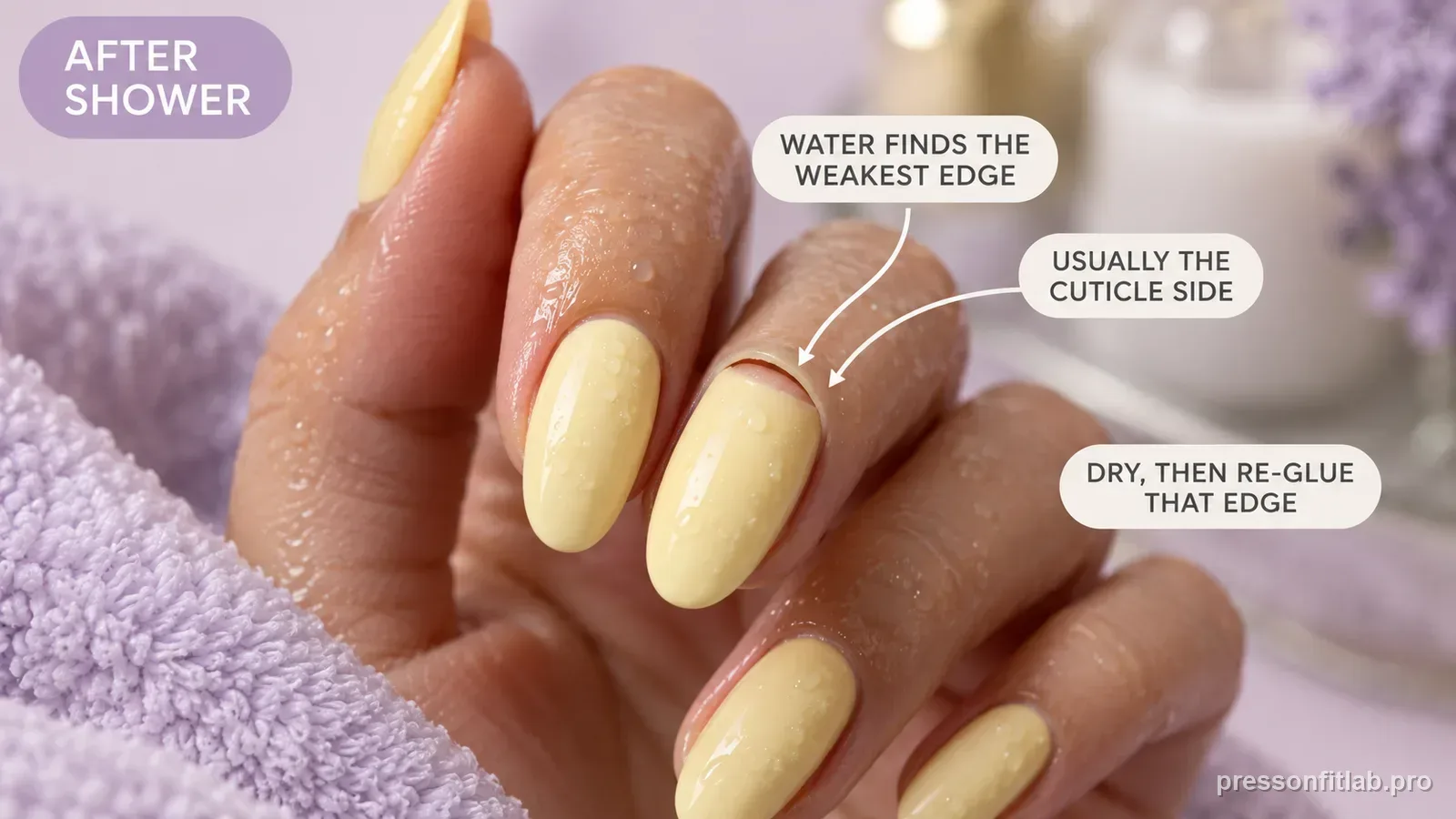
A shower often exposes a bond that was already marginal. Check whether the adhesive maker requires a dry period after application, then look for the first edge that lifted. If only one nail fails, its fit or contact is more suspicious than the shower itself.
Check these first
- ✓ Did the manufacturer specify a water-free set window?
- ✓ Was any edge raised before the shower?
- ✓ Did one nail fail or the whole set?
- ✓ Where did the first separation start?
Start with the product directions
Some press-on systems give specific instructions about water exposure after application. KISS, for example, publishes product-specific timing guidance on certain press-on sets, while other systems use different methods and timings.
That means there is no responsible universal “wait exactly X minutes” answer. Use the label or support page for the adhesive actually on your nails.
A shower can reveal a pre-existing gap
Water does not need to be the original cause if a cuticle or sidewall was already open. A small raised edge gives moisture and shampoo an easy route into an incomplete bond.
Inspect the nail under side lighting before your next shower. If hair already catches or one edge looks raised, solve that fit/contact problem first.
One nail versus all ten tells you something
If one thumb pops off after a shower while nine nails remain secure, investigate that thumb’s width, curve, and daily leverage. If most nails loosen together, review the shared prep and set-time routine.
This “local versus global” split is one of the fastest ways to avoid changing the wrong variable.
Plan water-heavy tasks before application
When practical, shower, wash hair, or do a long cleaning session before you start the manicure. Then dry thoroughly and apply the set when you can follow the product’s recommended set conditions.
This does not guarantee a specific wear time; it simply removes an avoidable stressor during the early bond period.
Do not glue over a wet or dirty lifted edge
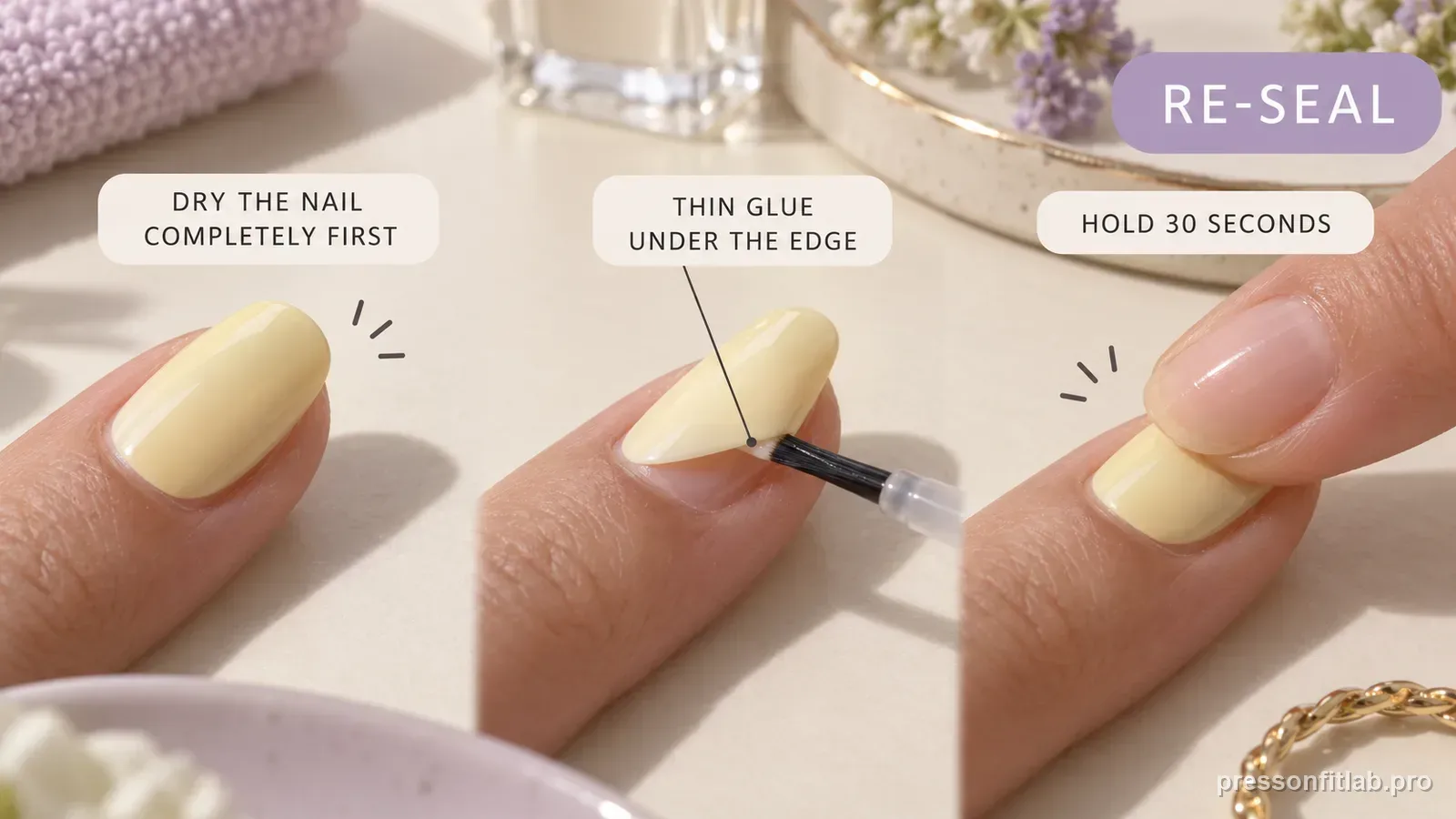
Once an edge has opened and collected water or product, repeatedly pressing it back down is not the same as a clean initial application. Use the manufacturer’s removal and reapplication directions.
A clean reset also lets you examine whether the tip itself was the wrong size or curve.
Compare immediate water failures with late-wear failures
A set that loosens during the first water exposure soon after application raises different questions from a set that survives several days and then lifts during a shower. For the early failure, verify the exact product’s post-application water guidance and whether the bond had complete contact from the start. For the later failure, inspect for a pre-existing raised edge that water simply exposed.
Keeping those timelines separate prevents every shower-related pop-off from being treated as the same problem. The water event may be the trigger, but the weak point can originate earlier in fit or application.
Record the first lift point before the next shower
If you can see a small cuticle or side lift before water exposure, photograph or note it. That gives you a baseline for the next test. A shower that enlarges an existing gap is different from a fully flush nail releasing without a visible weak edge. The distinction helps you decide whether to prioritize fit, application timing, or a shared preparation issue.
Diagnostic table
| What you see | What it suggests | Next check |
|---|---|---|
| Whole set loosens | Shared prep/set issue | Review product water guidance. |
| One nail pops | Local fit/contact | Inspect that nail. |
| Edge lifted before shower | Water entered existing weak point | Fix the lift, not just timing. |
| Applied right before shower | Set window may be interrupted | Plan water tasks first. |
A controlled test plan
- 1
Read product water guidance.
- 2
Shower before application when practical.
- 3
Dry thoroughly.
- 4
Inspect edges before water exposure.
- 5
If one nail fails, refit that finger.
What not to do
- Using one universal wait time.
- Re-gluing damp or dirty lifted edges.
- Blaming water while ignoring visible fit gaps.
Worked troubleshooting example
Example: three nails loosen after a shower, but only one shows a visible lifted edge beforehand. You resist the urge to conclude that water alone caused all three failures and inspect each finger separately.
The visibly lifted nail has a side gap that likely allowed water into an already weak bond. The other two were applied late the previous evening, so you also verify the specific product’s post-application water directions before the next set. You then repeat the routine without changing tip size, glue amount, and shower timing all at once.
If only the pre-lifted nail fails on the retry, fit was the stronger clue for that finger. If many nails fail together again, the shared application or product-timing variables deserve more attention.
Field notes
A shower is often when a weak edge becomes obvious, not necessarily when the weakness was created. The lift location is the diagnostic clue.
Brand instructions legitimately vary, so a site-wide fixed waiting time would be less accurate than directing readers to the actual adhesive system they use.
Frequently asked questions
Why do my press-ons pop off every time I shower?
Check the adhesive’s set-time guidance and inspect for a pre-existing lifted edge. Repeated failure on the same finger often points to fit as well as water exposure.
How long should I wait before showering?
Use the timing provided by your specific adhesive or press-on manufacturer; systems differ.
Can I glue a nail back on right after it pops off in the shower?
Dry, clean, and reapply only according to the product directions rather than trapping moisture under a quick repair.
Sources checked
Sources below are page-specific. We prioritize manufacturer directions for product-specific steps and use medical or dermatology guidance when a safety question requires it. Always follow the instructions for the exact adhesive or set you own.