Can You Wear Press-On Toenails in Closed-Toe Shoes? A Comfort Check
Check toe-box height, length, width and sock friction before wearing press-on toenails in sneakers, boots or dress shoes.
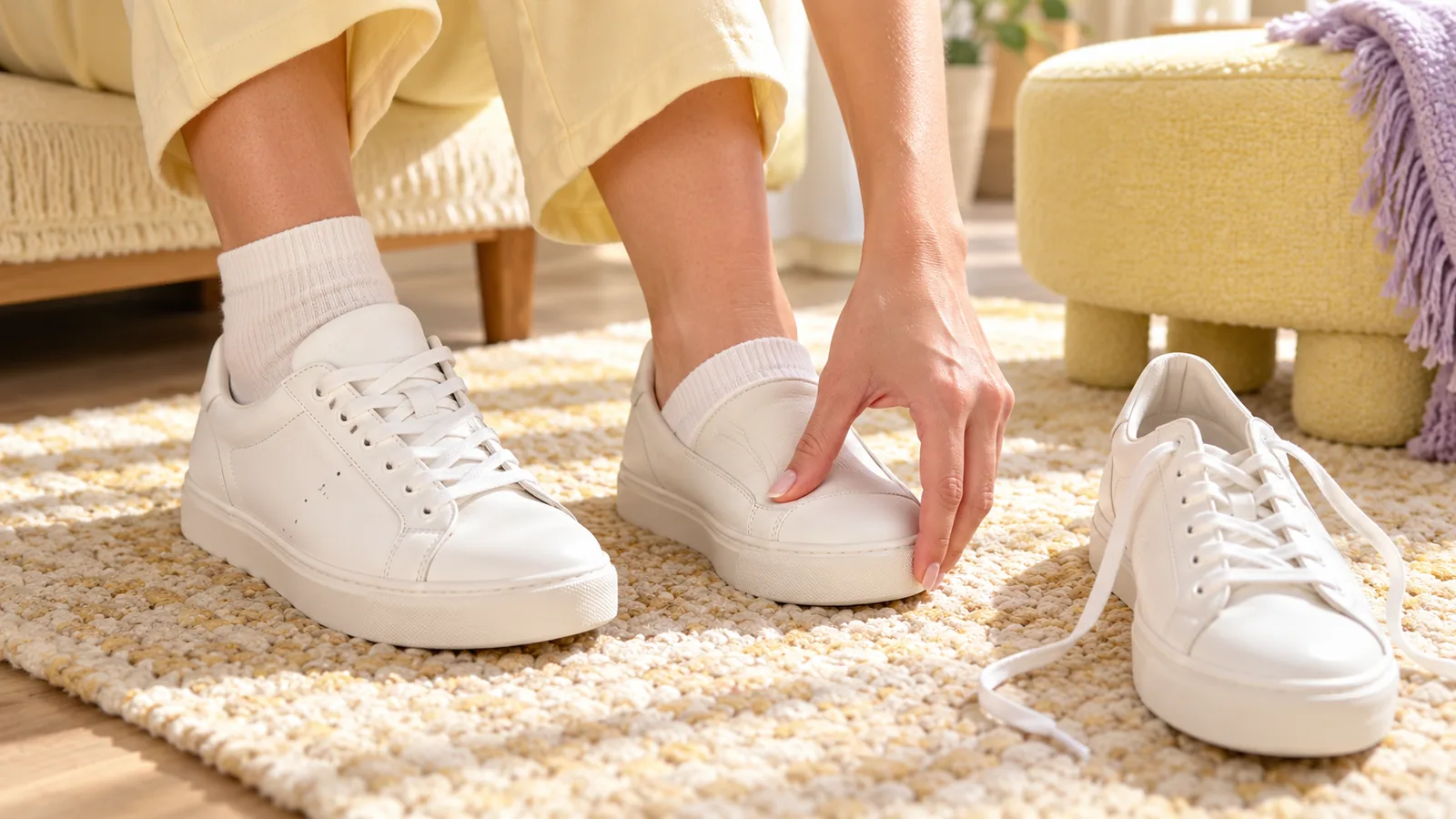
Sometimes, but there is no one-size-fits-all answer: a short, low-profile press-on in a roomy shoe may feel different from a longer tip in a low or narrow toe box. Try the exact shoe and sock combination at home, first seated, then standing and walking briefly. If the tip touches the shoe, feels pinched, or causes pain or rubbing, change the shoe or remove the enhancement according to its directions. Do not push through pressure.
Check these first
- ✓ Does the artificial tip have room above it when the foot is standing in the actual shoe?
- ✓ Do the toe sides feel free rather than squeezed when the shoe is laced or fastened normally?
- ✓ Does a clean sock slide without catching the tip or creating a new pressure point?
- ✓ Can you walk briefly indoors without pressure, rubbing, or a change in your gait?
- ✓ Are your natural nails healthy and comfortable before covering them?
Why closed shoes change the fit question
A press-on pedicure adds material above and sometimes beyond the natural toenail. A shoe that felt comfortable with bare nails can feel different if the artificial tip meets the upper, the toe box narrows at the sides, or the foot slides forward as you walk. The amount of room varies by shoe shape, size, sock thickness, lacing, foot shape, and how long you will wear it. A product page may describe one particular pedi tip as slim or suitable for sneakers, but that is not a guarantee for every wearer or shoe.
The useful question is not simply whether press-on toenails can be worn with sneakers. It is whether this specific tip, on this toe, in this exact shoe and sock, leaves comfortable room while standing and moving. The American Academy of Dermatology advises choosing well-fitting shoes with a wide toe box to prevent rubbing, especially when protecting an injured nail. Treat that as a practical footwear principle, not as a test that can certify a press-on for every activity.
Check height, width and forward movement separately
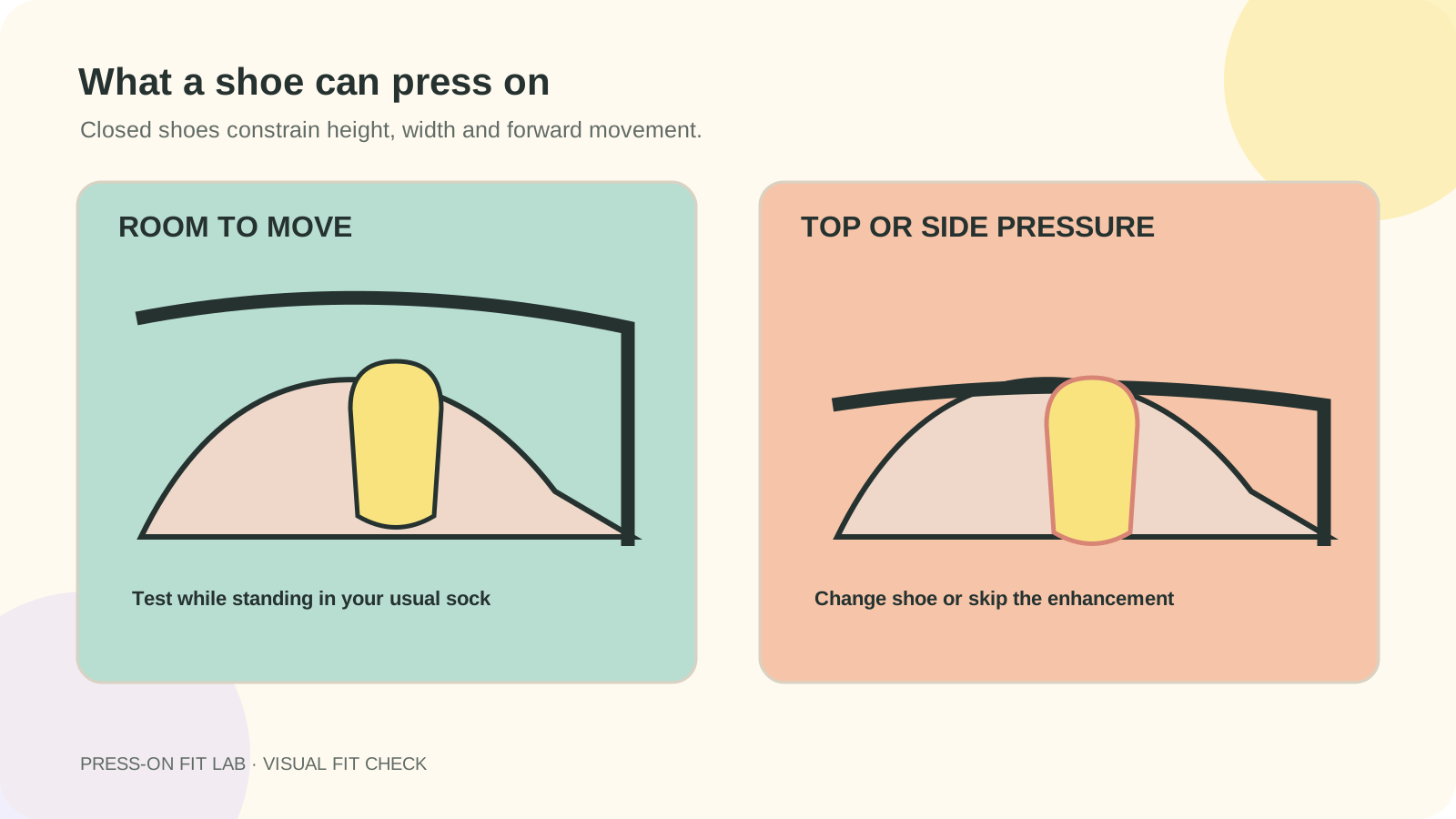
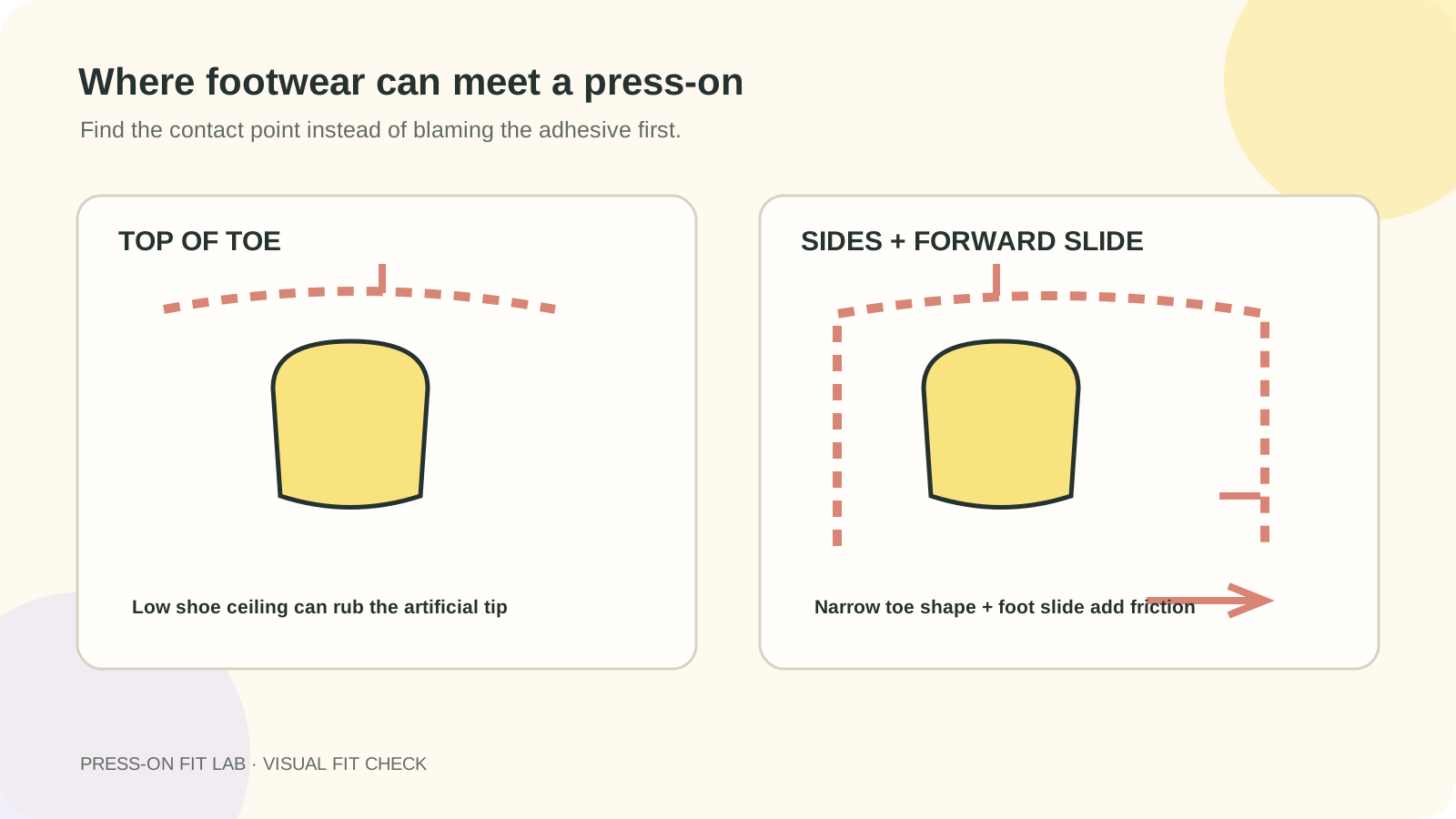
Height is the space between the top of the artificial tip and the shoe’s inner upper. A low-profile shoe can press down even when the shoe seems wide enough. Width is different: a tapered toe box or tight sock can squeeze the sides of the toes. Length and forward movement matter too. If a shoe lets the foot slide toward the toe, a longer artificial edge may contact the front earlier than it does while sitting. Looking at just the visible part of a shoe does not tell you how the internal toe box fits.
Check each dimension with your normal sock and the shoe fastened the way you would wear it outside. Do not remove cushioning, stretch a shoe, or buy a larger size just to accommodate a nail that hurts. If the shoe already crowds your toes, the press-on reduces the margin rather than solving the fit problem. The AAD notes that poorly fitting shoes can contribute to nail injury and recommends a roomy toe box; a cosmetic enhancement should never override that comfort check.
Use a short, staged test before a full day out
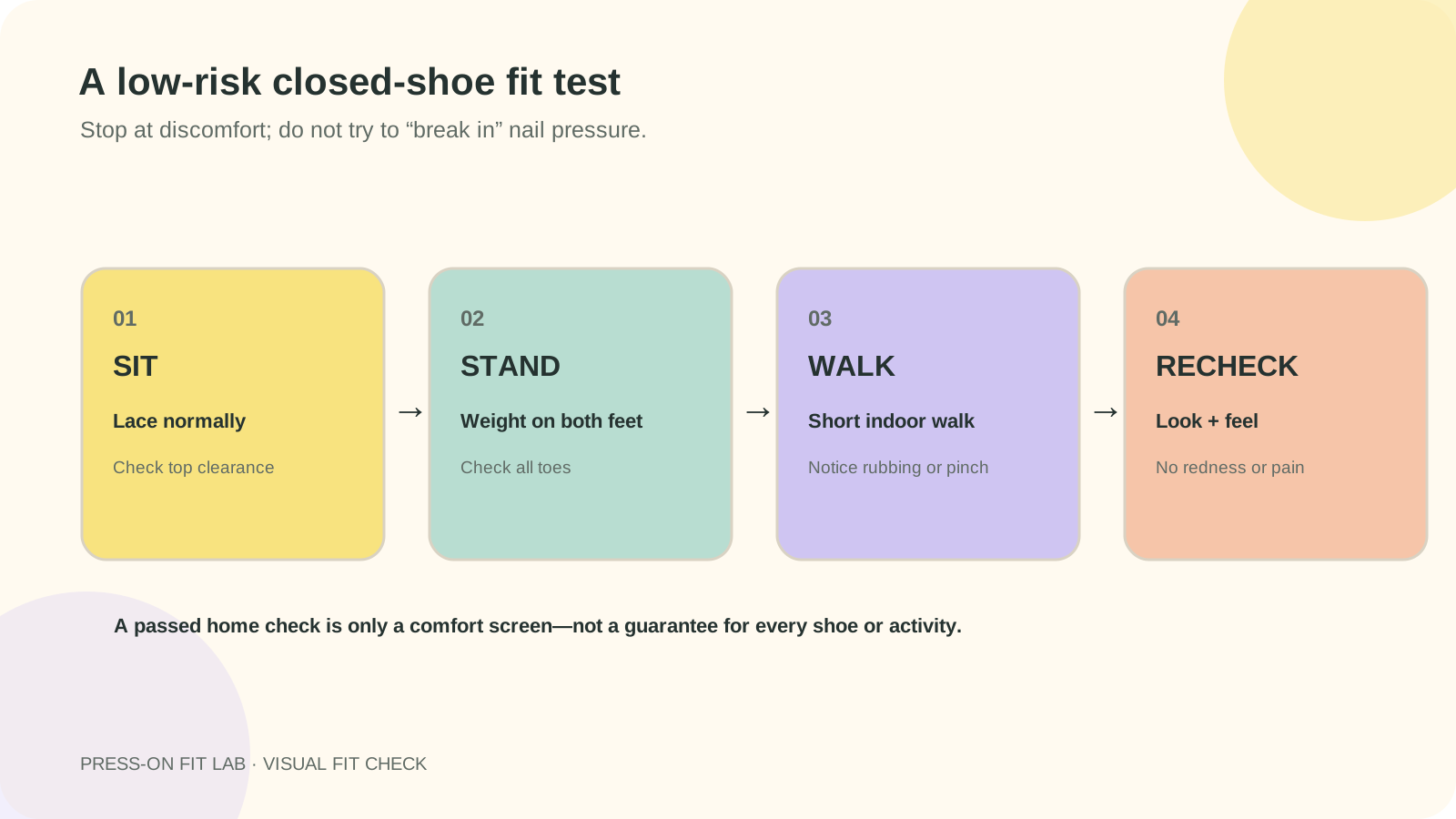
Test only after the press-on has been applied and set according to the product’s own instructions. Put on the sock you plan to wear and fasten the shoe normally. Sit first and notice whether the upper touches a nail. Then stand with weight on both feet; standing changes the way the toes meet the shoe. Gently shift weight and take a short indoor walk on a clear floor. This is a basic comfort screen, not a clinical pressure measurement, and a few comfortable steps do not promise that a long walk or workout will feel the same.
After the brief walk, remove the shoe and check whether the tip shifted or the sock caught; note any discomfort that appeared only under load. Do not keep repeating the test if pressure is clear. A tip that feels fine while seated but contacts the top when standing is not a good match for that shoe. Choose a roomier shoe, a shorter product profile if the maker offers one, or natural nails for that activity. The test should end with a comfortable choice, not with an attempt to toughen the toe up.
Choose a profile for the footwear you actually wear
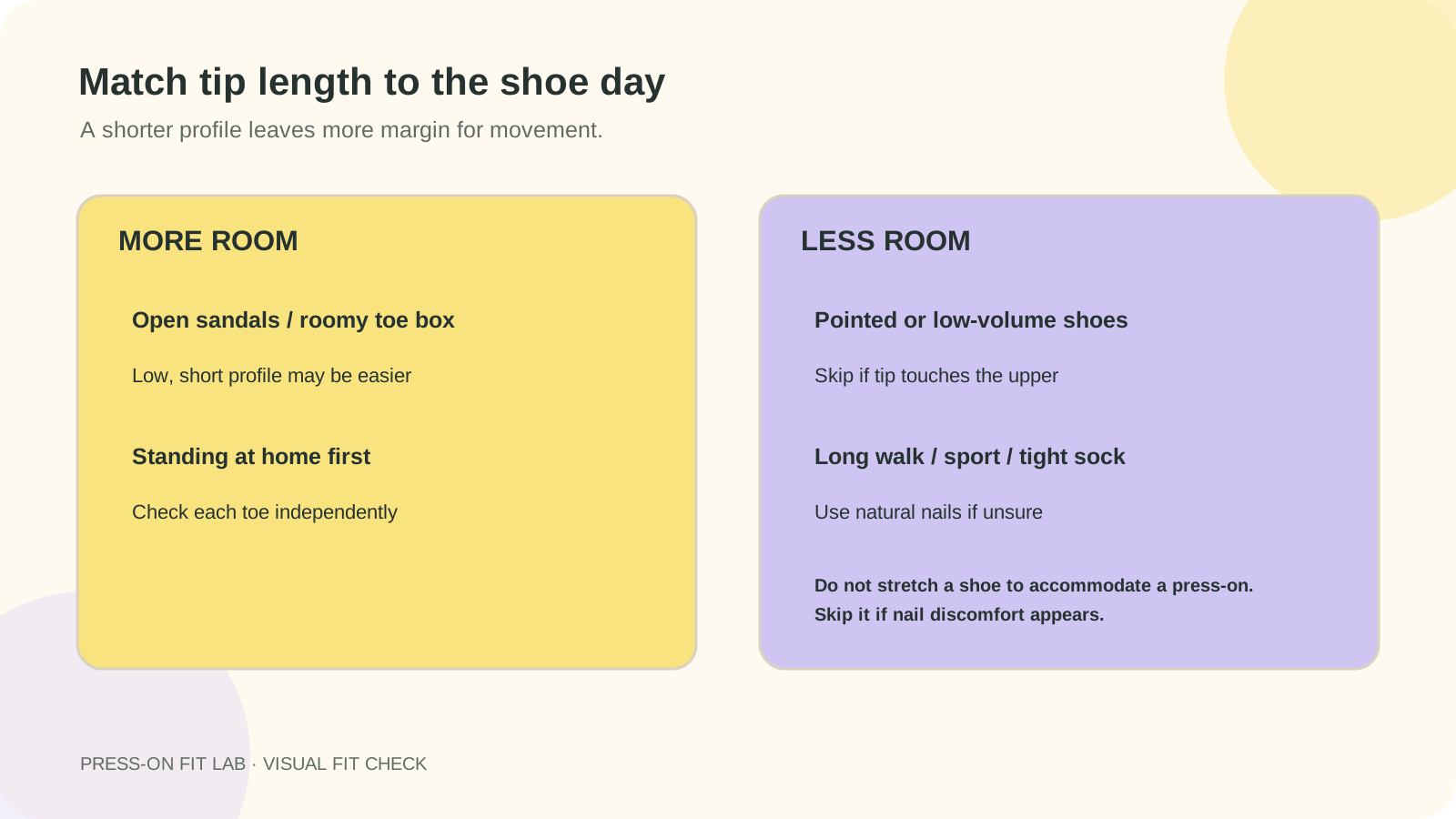
If your day involves closed shoes, consider the expected contact before choosing a dramatic length. A short profile that remains within the product’s intended shape usually leaves more margin than a tip that projects beyond the toe. That does not mean short tips are automatically safe or that they fit everyone. Width and curve still matter, and the shoe itself must fit your foot. Check the maker’s measurements and instructions; do not trim or alter a designed tip unless that product permits it.
Think about the whole day, not the first minute in front of a mirror. Thin dress socks, thick athletic socks, a boot, and a running shoe can create different space and friction. If you will alternate footwear, test the tightest pair you expect to wear. For long walks, sport, or work that keeps you on your feet, choose a conservative setup and bring the product’s removal guidance with you. If the shoe or tip becomes uncomfortable, change the plan rather than assuming the adhesive will settle into a better fit.
Read rubbing and pressure as a reason to stop
Pressure can show up as a tip touching the upper, a squeezed side edge, repeated rubbing from the sock, or soreness after a few steps. Pain, numbness, throbbing, heat, or a change in how you walk are not signs that the shoe needs to be broken in around the press-on. Remove the shoe and stop the test. If the enhancement is responsible, remove it using the directions for that adhesive system; do not pull or pry a bonded tip. A comfortable fit matters more than preserving a set for one event.
The AAD’s nail-injury guidance recommends keeping nails short and wearing well-fitting shoes with a wide toe box to reduce rubbing. It also says not to put sticky products on an injured nail while it heals. If you have a visible injury, unusual discoloration, a sore or inflamed area, a fungal nail problem, brittle nails, diabetes, or circulation concerns, do not cover the issue with an artificial nail. Seek appropriate professional advice; this guide is about cosmetic fit, not diagnosing toe or nail symptoms.
Water, sweat and repeated wear change the plan
A shoe test at home only checks a short, dry interval. Heat, sweat, long periods on your feet, and damp socks can change friction and how an adhesive behaves. Do not infer an all-day wear promise from a quick indoor walk. A pedicure kit’s own directions may specify how long to avoid water, which adhesive method to use, and whether its tips can be reused. Follow those instructions exactly; another brand’s advice about swimming, sports, or wear length does not transfer automatically.
If a tip starts lifting inside a shoe, stop and remove it when safe rather than pressing it back down over dust or moisture. A loose edge can catch on a sock, and adding more glue in the shoe is not a controlled repair. Check that the natural nail remains comfortable after removal. If you notice irritation from an adhesive or remover, discontinue the product and consult a health professional; FDA says nail products should be used according to their labels and reactions should be reported.
A decision rule for choosing shoes and press-ons
Wear the combination only when the tip sits comfortably, the shoe has room at the top and sides while you stand, the sock does not catch, and a brief walk does not create rubbing or pressure. If one check fails, treat the pair as a no for that activity. A different shoe with a wider, taller toe box may work, or the simpler choice may be to skip press-ons that day. Do not rely on a brand’s general statement that a certain style works in sneakers to override what your own foot tells you.
This conservative rule keeps the decision reversible: you can choose footwear, product profile, or timing before a long day begins. It does not establish a medical threshold, guarantee wear time, or replace care from a podiatrist or dermatologist. When the reason for discomfort is unclear, when a nail is injured or changing, or when you have a condition that affects foot circulation or sensation, leave the enhancement off and ask a qualified clinician.
Diagnostic table
| What you see | What it suggests | Next check |
|---|---|---|
| Tip touches shoe upper while standing | Not enough vertical toe-box clearance | Choose a roomier shoe or skip the tip for that activity |
| Side of a toe feels squeezed | Shoe or sock may be too narrow for the foot and tip | Loosen only as intended; if squeeze remains, change footwear |
| Tip catches on sock | Edge may be lifting, long, or contacting the fabric | Stop, inspect, and remove per label if it is loose |
| Comfortable seated but pressure begins while walking | Foot movement changes contact under load | Do not continue the outing in that combination |
| Pain, numbness, or soreness appears | The fit is not comfortable; cause cannot be diagnosed here | Stop wearing it and seek professional advice if symptoms persist or concern you |
A controlled test plan
- 1
Choose the exact shoe and sock combination planned for the activity.
- 2
Apply the press-on set only according to its product directions and allow its stated set time.
- 3
Sit, fasten the shoe normally, and check whether the upper touches any nail.
- 4
Stand and gently shift weight; check both top and side room across all toes.
- 5
Walk briefly indoors, then stop at the first rubbing, pressure, or discomfort.
- 6
Remove a loose or uncomfortable tip only by following the product’s removal instructions; choose another shoe or skip the enhancement.
What not to do
- Do not push through pain, numbness, rubbing, or pressure to see whether the shoe breaks in.
- Do not assume every product marketed for pedicures works in every sneaker or tight shoe.
- Do not alter a shoe or force a longer tip into a low toe box for a single event.
- Do not cover injured, sore, discolored, brittle, or possibly infected nails with press-ons.
Worked troubleshooting example
Jordan applies a short press-on pedicure using the kit’s directions. The tips look fine in sandals, but she plans to wear low-top sneakers and thin socks to a concert. Sitting down, no nail touches the upper. Standing, the left big toe’s artificial tip brushes the shoe ceiling. During a short indoor walk, that same toe feels pressed forward. She stops the test rather than hoping the shoe will stretch, then changes to a roomier pair and repeats the fit check.
The second pair leaves space above and along the toe, and the sock slides without catching. That is a more suitable pairing for this short outing, though Jordan still does not treat a two-minute home walk as a promise for hours of standing. If pressure returns, she will change shoes or remove the tips as directed. Her decision is based on comfort in the specific footwear, not a blanket rule that press-on toenails are always shoe-safe.
Field notes
The staged test is a practical comfort screen based on the actual shoe and sock; it is not a validated medical test or a wear-time guarantee.
AAD guidance is about footwear and nail safety. Product directions remain the source for a particular adhesive’s cure, wear, water, and removal instructions.
Frequently asked questions
Can I wear press-on toenails with sneakers?
Sometimes. Product shape, tip length, foot shape, sock, and toe-box room all matter. Test the actual shoe while standing and walking briefly; skip that combination if the tip touches, pinches, or rubs.
Should press-on toenails be short for closed shoes?
A shorter profile can leave more clearance, but it does not guarantee fit. Check height, width, and toe movement in your own shoe and follow the product’s directions.
What if my toenails hurt only after I put on shoes?
Take the shoes off and stop wearing that combination. Do not push through or force the artificial nail off; use the set’s removal directions and seek professional care if pain persists or you are concerned.
Can I wear press-on toenails for a long walk or workout?
A short indoor check cannot predict a long or strenuous activity. If footwear feels tight, the tip catches, or you have a nail or foot health concern, choose natural nails or ask a qualified clinician.
Sources checked
Sources below are page-specific. We prioritize manufacturer directions for product-specific steps and use medical or dermatology guidance when a safety question requires it. Always follow the instructions for the exact adhesive or set you own.
- American Academy of Dermatology — Tips to Care for an Injured Nail
- American Academy of Dermatology — 11 Tips for Healthy Nails
- American Academy of Dermatology — Manicure and Pedicure Safety
- Doonails — Soft Gel Press-On Pedicure Application Instructions
- U.S. FDA — Nail Care Products: Safe Use and Reporting Reactions